French Polynesia · Culture
Raiatea, Where It Started
Hawaii, New Zealand, Easter Island. If you follow the migrations back far enough, a great many of them lead to a peninsula on the east coast of an island most visitors use as an airport.
Raiatea sits at the centre of the Polynesian Triangle — the last part of the world humans reached. Taputapuātea, on its southeast coast, was the paramount marae of eastern Polynesia, and when new marae were founded on distant islands they were founded with a stone carried from here.
Almost nobody staying in the Leeward Islands goes to look at it. It is free, it is open, and it is a forty-five minute flight from Papeete.
Smart Summary
- Taputapuātea was inscribed on the UNESCO World Heritage List in 2017, for a thousand years of mā’ohi civilisation rather than for architecture.
- The listed property is not just the stones. It includes two forested valleys, part of the lagoon and reef, and a strip of open ocean — because the sea is the point.
- Entry is free and the site is unenclosed. There are numbered markers and information panels, and roughly an hour covers it properly.
- Go in the morning. It is exposed, low and hot by midday.
- You need a vehicle. The site is on the far coast from the airport and the town.
What a marae is, and what this one was
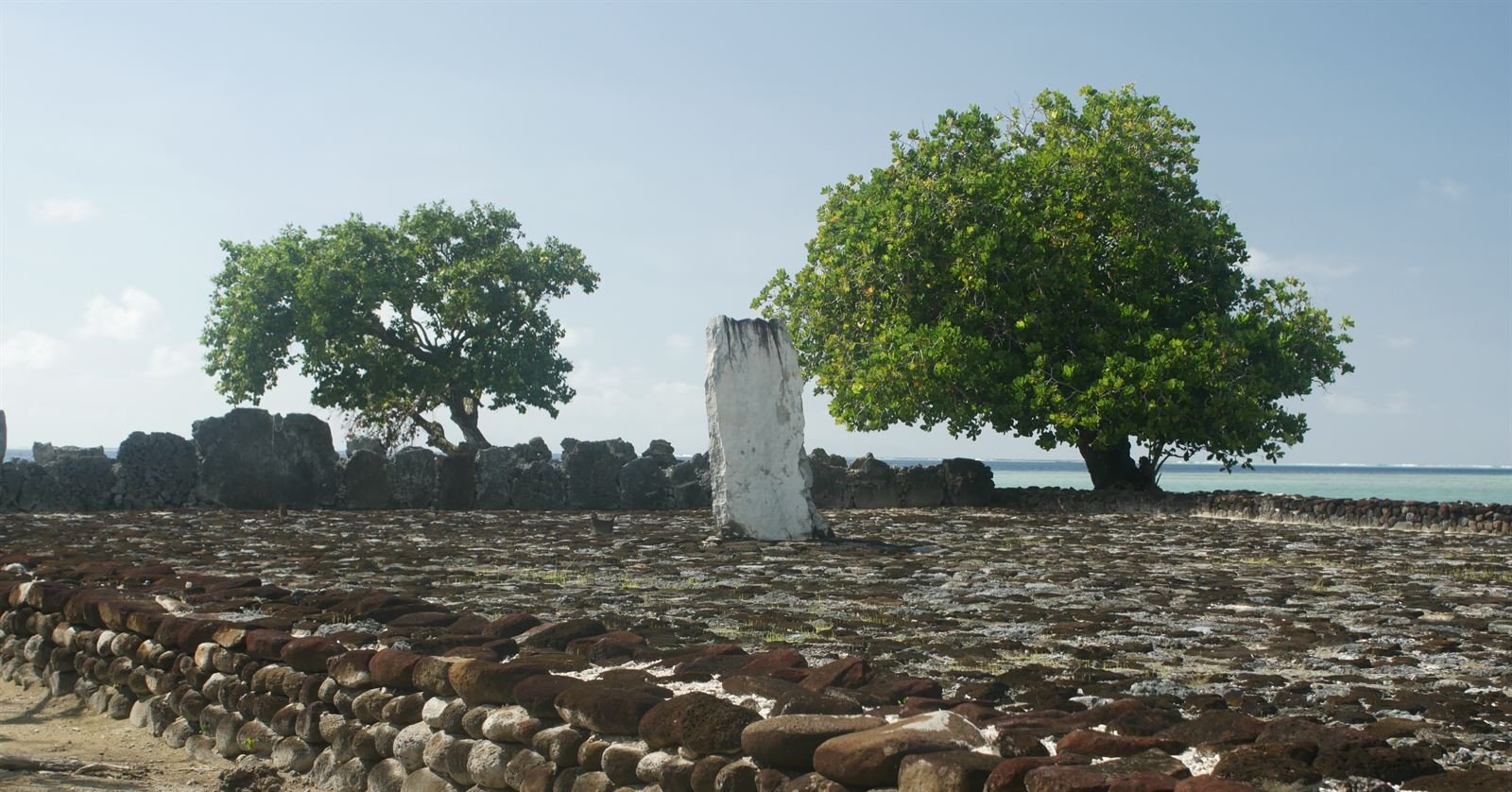
A marae is an open-air ceremonial ground: a paved rectangular courtyard, usually with a raised stone platform at one end. They are found across Polynesia, and UNESCO describes them as places where the world of the living met the world of the ancestors and the gods.
Taputapuātea is the one they all refer back to. Dedicated to ‘Oro, positioned at the end of a peninsula that runs out into the lagoon, between the land and the sea — which is the whole idea rather than a picturesque accident. Its rise is tied to a particular line of chiefs, and it became the centre of a political alliance that reached across most of Polynesia.
Chiefs, priests and navigators came here from islands thousands of kilometres apart. They entered through a pass in the reef reserved for the purpose. And the stones they took away with them, to lay in the foundations of new marae on new islands, are why Raiatea is understood as the homeland of the wider region.
The courtyard is basalt, roughly forty by sixty metres. At the eastern end is the ahu, the raised platform. Other marae sit within the complex, with different functions — one of them used for the naming of chiefs.
Why the sea is part of the site
The inscribed property includes ocean, and this is the detail that makes the place make sense.
Polynesian expansion across the Pacific was a deliberate navigational achievement, carried out in outrigger canoes, by people reading swells, stars, birds and cloud. UNESCO’s citation names that skill explicitly. Taputapuātea is the point that network organised itself around: departures, arrivals, alliances, and the return of canoes through a pass that had ceremonial meaning.
Standing on the stones and looking only at the stones misses it. The site is a harbour as much as a temple.
How to be there
The site is unenclosed, unstaffed for much of the time, and free. That combination puts the responsibility on you.
Do not walk on the platforms or the stone structures. This is not a ruin that has been decommissioned; it is a sacred place with a living relationship to the people of the district, who campaigned for its protection and its listing.
Read the panels. A field of low stone walls is genuinely hard to read cold, and the difference between an interesting hour and a puzzled fifteen minutes is knowing what you are looking at.
A local guide changes it entirely, if you can arrange one. This is one of the few places in the territory where we would say that without hesitation.
Give it an hour. Longer if the tide and the light are doing something.
The rest of the island
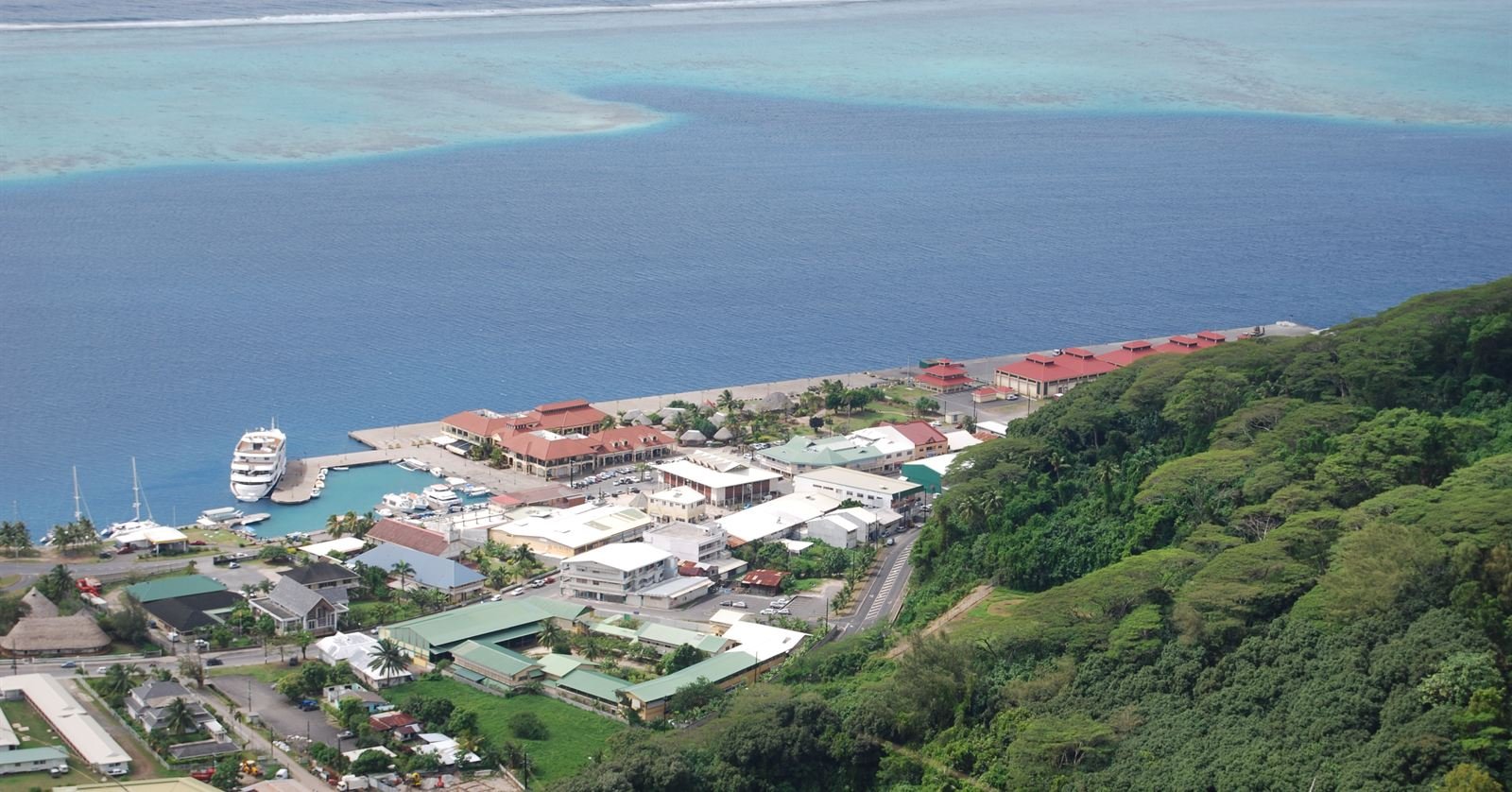
Raiatea is the economic centre of the Leeward group, and it is not a beach destination. It has no real beaches on the main island. Visitors who arrive expecting one leave unimpressed, which is a large part of why it stays quiet.
What it has instead: the airport for this half of the Society Islands, the charter and sailing base for the whole territory, a river you can take a boat up into the interior, a mountain worth the walk, and the shared lagoon with Taha’a.
Our view: Raiatea is where you sleep and Taha’a is where you spend the days, unless sailing is the reason you came, in which case reverse it.
When to go
May to October for the dry season.
Morning for the marae, at any time of year. It is a low, open, unshaded site and the middle of the day is uncomfortable and photographically flat.
If you are building a Leeward Islands week, Raiatea and Taha’a share both the lagoon and the airport, so they cost one transfer between them rather than two.
What we would skip
Raiatea as a beach stop. It is not that, it has never claimed to be that, and the disappointment is entirely a matter of expectation.
The forty-minute version of Taputapuātea, squeezed between a flight and a boat transfer. Either give it a morning or leave it for a trip where you can.
Every itinerary in the Leeward Islands passes through this island, and almost all of them treat it as the way to somewhere with better swimming.
An hour on a peninsula on the far coast is the only place in French Polynesia where you can stand at the centre of the thing rather than in one of its lagoons.
Marae photograph: The Taputapuātea marae on Raiatea by Octave Fargier, CC BY 4.0, cropped and resized.

Uturoa photograph: Raiatea 2008ville by United144, CC BY-SA 3.0, cropped and resized; this modified version is released under the same licence.

Join