French Polynesia · Practical
Fakarava, North or South
The atoll is sixty kilometres long. The airport is at the north end. The dive that made the place famous is at the south end, several hours across the lagoon by boat.
Nobody tells you this before you book, and it is the whole decision. You are not choosing an atoll. You are choosing an end of one.
Smart Summary
- North and south are effectively two destinations. Rotoava and the airport at one end, Tetamanu and the south pass at the other, a long boat crossing between them.
- The south pass is the reason divers come. Grey reef sharks in numbers, in shallow water, all year.
- June and July are different. Grouper spawning draws hundreds of sharks into the pass to hunt — the phenomenon divers call the shark wall.
- Fakarava is a UNESCO biosphere reserve, along with neighbouring atolls. That is not marketing; it constrains what happens there.
- If you are not diving, consider Rangiroa instead, or consider whether an atoll belongs in your trip at all. Flat coral after volcanic islands is a real adjustment.
What an atoll actually is
Worth stating plainly, because visitors arriving from Bora Bora are sometimes quietly disappointed and cannot say why.
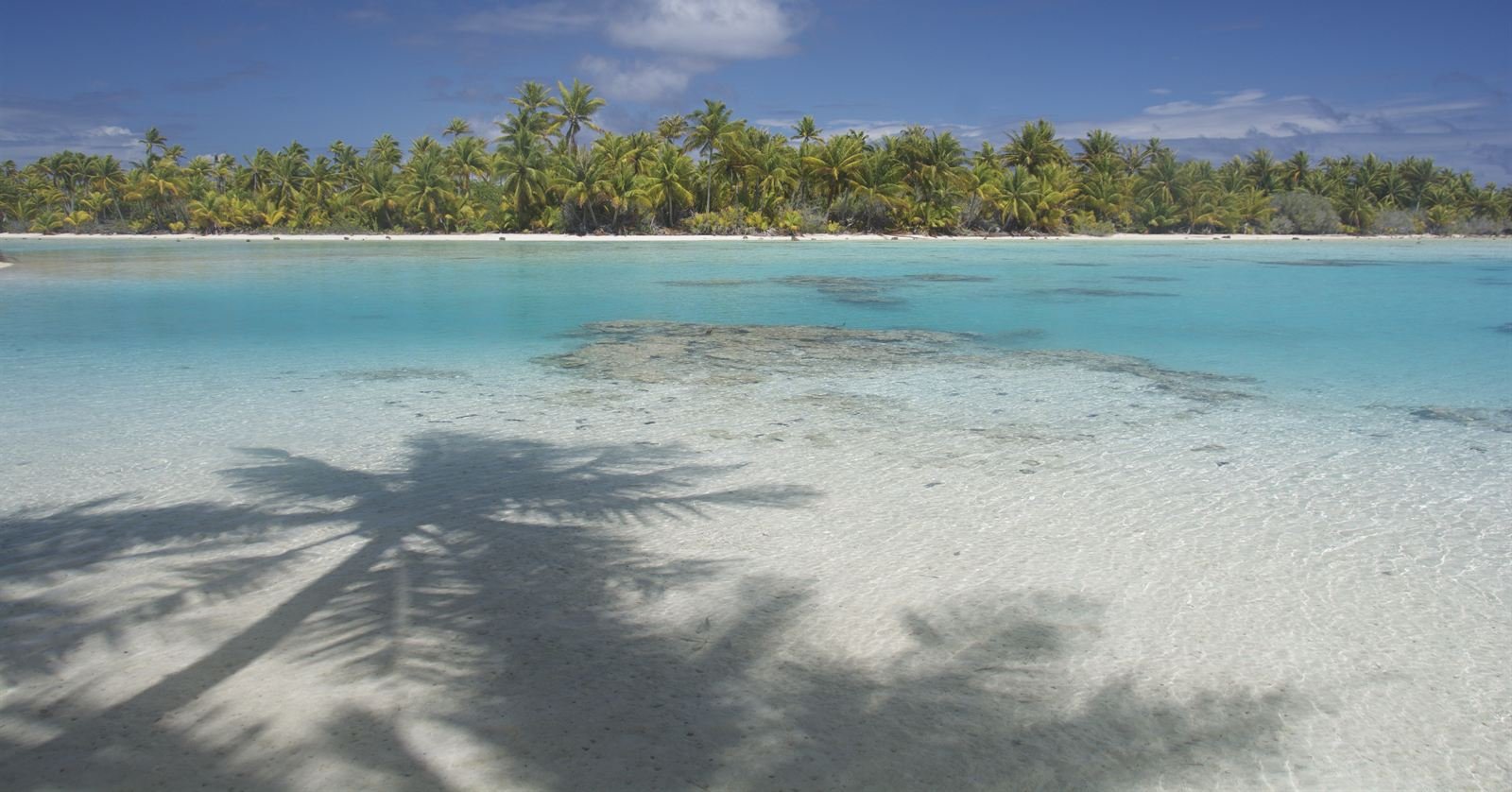
An atoll is what remains after a volcanic island sinks: a ring of coral around a lagoon, with no mountain, no interior, and almost no elevation. Fakarava’s ring encloses a lagoon roughly sixty kilometres by twenty-five. The land is a thin strip. You can stand on the ocean side and see the lagoon side.
The consequence is that everything interesting is underwater or on the horizon. There is no view from a height because there is no height. If your trip has already delivered the green peaks of the Society Islands, an atoll can read as flat and empty on arrival — and then completely reverse that impression the moment you put your face in the water.
The two passes
A pass is a break in the reef where the lagoon exchanges water with the ocean. Plankton flushes out on the falling tide, and everything that eats plankton, and everything that eats those things, gathers where it happens. This is why the Tuamotus are a diving destination at all.
Garuae, in the north, is a very wide pass and sits near the airport and the main village. Grey reef sharks, whitetips, napoleon wrasse, barracuda, eagle rays, and visibility that regularly runs beyond thirty metres. It is a drift dive in current and it wants an intermediate diver rather than a beginner.
Tumakohua, in the south, is the one people cross the world for. Shallower and more concentrated: sharks in permanent residence, in numbers, at depths that make the dive accessible to a wider range of certifications than its reputation suggests.
In June and July, groupers spawn in the south pass and several hundred grey reef sharks arrive to hunt them. This is the shark wall, and it is a scheduled natural event rather than a piece of luck — which also means those weeks book out furthest in advance.
North or south — how we would decide
Stay north if you want to dive both passes, if you want shops, a choice of places to eat and a bicycle to ride, and if the trip includes people who are not diving. The south is reachable as a long day.
Stay south if the south pass is the point. You are on a small settlement at the end of a very large lagoon, the accommodation is guesthouse rather than resort, and you will dive the same pass repeatedly on different tides — which is the correct way to dive it. The crossing from the airport is hours long and is genuinely part of the trip.
Do not split a short stay across both. The transit eats a day at each end.
Five nights in the south is a diving holiday. Three nights in the north is an atoll stopover. They are not the same purchase.
Where we would stay
There are no hotels on Fakarava. The whole atoll is guesthouses and lodges, including at the top of the market, and that is the local standard rather than a gap in the offer. Two addresses, one at each end, cover the decision above.
Havaiki Lodge is in the north, near Rotoava and the airport, and it is built onto a working pearl farm run by the same family — which is the thing that distinguishes it from a row of bungalows on a beach. Three categories: overwater on the beach side, panoramic garden, standard garden. The name is worth knowing: Havai’i, or Havaiki, is the atoll’s own older name, so the lodge carries what the island used to be called.
Tetamanu Village & Sauvage is at the other end, beside the south pass, in the settlement that gives the pass its name. Staying there is the answer to the problem the section above describes: from the north, the south pass means sixty kilometres of lagoon, three hours of boat, a minimum number of divers and the weather agreeing. From Tetamanu you walk to it.
Neither publishes its number of rooms, and we are not going to invent one. This is the atoll where that is hardest: for one of the two, five different figures circulate on booking sites, from four bungalows to sixteen. Ask when you enquire, and treat any number you read elsewhere as decoration.
Book further ahead here than anywhere else in these islands. There are few beds at the south end and a fixed number of dive places each day, and in June and July both are spoken for many months out.
One more thing, and it catches divers out. The multi-island dive passes sold across French Polynesia do not cover the day excursions to Fakarava’s south pass — the dive the atoll is famous for is outside the product built to make diving cheaper. Another argument, if you needed one, for sleeping at that end rather than buying your way across the lagoon.
And one thing to expect on your bill. A local accommodation tax is collected by the property on top of the rate, and the territory is changing how it works: each commune sets its own scale, and the new system applies to stays from 1 January 2027. Any figure we printed today would be wrong by the time you travel, so we are not printing one — ask when you book.
A word on how it is dived
In strong current, divers are commonly encouraged to hold onto the bottom to stay in position, and in some places that means holding onto coral.
We think this is worth saying out loud in a UNESCO biosphere reserve. A reef hook on dead substrate, or simply better dive planning around the tide, does the same job without the damage. It is a fair question to ask an operator before you book, and the answer tells you what kind of operation you are dealing with.
The other atoll
Rangiroa is the larger and longer-established Tuamotu dive destination, with its own famous pass, dolphins that are genuinely resident rather than occasional, and more infrastructure. It is the easier atoll and the less pure one.
If you are diving once in the Tuamotus, Fakarava south. If you are spending two weeks and want variety, both. If you are not diving at all, an atoll is a place to be still in for three days, and that is a legitimate reason to go — but be clear that it is the reason.
When to go
May to October for the dry season, and for the south pass in particular, June and July for the spawning aggregation. Demand near the passes runs many months ahead in that window.
November to April is wetter and quieter. The diving continues; the surface interval is less pleasant.
Book early in a way you would not need to elsewhere. There are a small number of beds near the south pass and a small number of dive slots each day. This is not a destination that absorbs latecomers.
What we would skip
The day trip from the north to dive the south, if there is any alternative. Hours of boat, two dives, hours of boat.
Treating the atoll as a beach stop. It is not a beach destination in the sense people mean. The sand is there and the point is what is under the water at the edge of it.
Sixty kilometres of lagoon, two gaps in the reef, and several hundred sharks that turn up at the same place every June for the same reason they have always turned up.
Pick an end of the atoll and stay at it.
Lagoon photograph: Lagon vert by Pierre BURGALAT, CC BY-SA 4.0, cropped and resized; this modified version is released under the same licence.

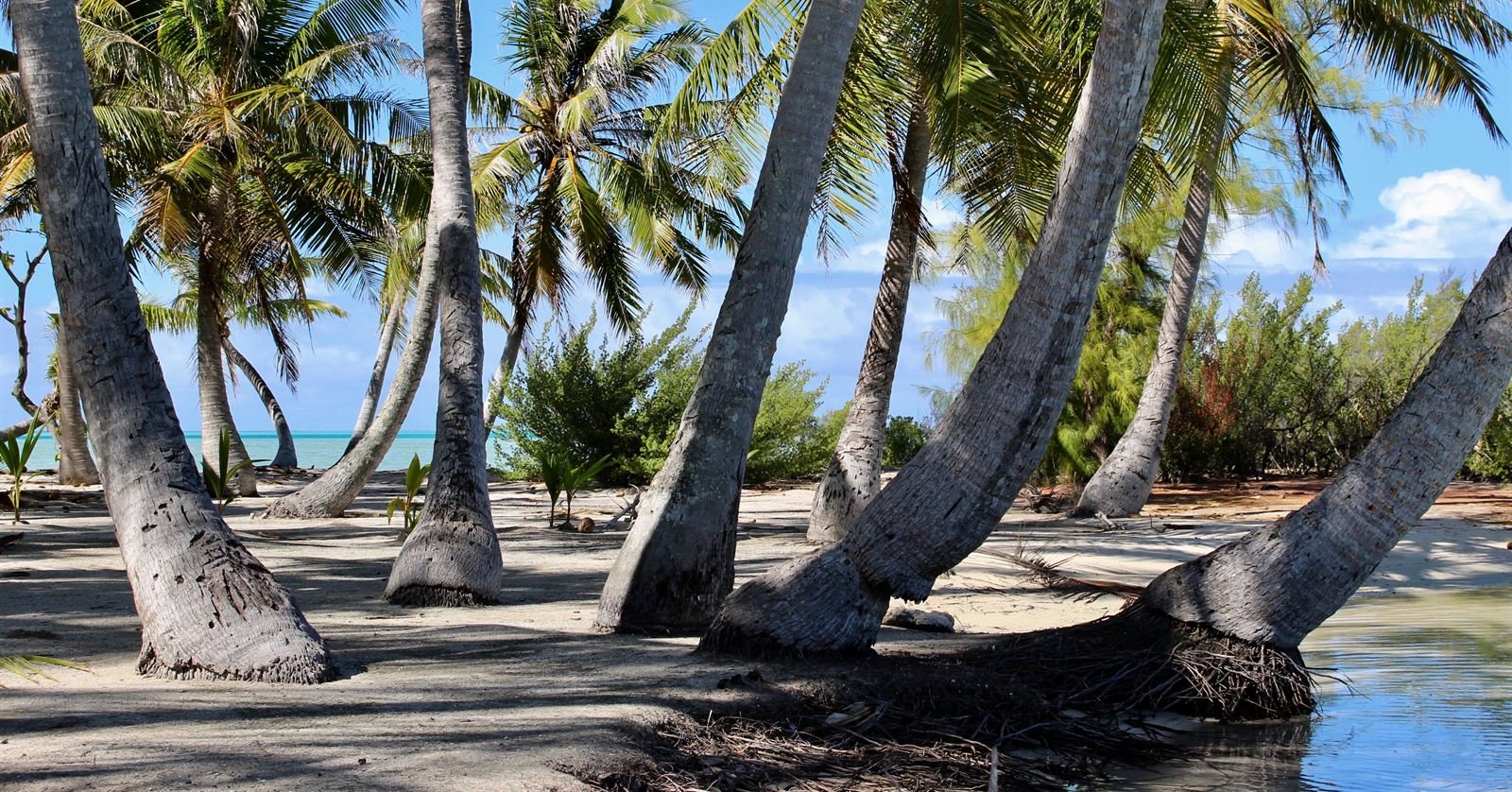
Motu photograph: Fakarava – Cocoteraie au Lagon vert motu Farakau by Fanny98716, CC BY-SA 4.0, cropped and resized; this modified version is released under the same licence.

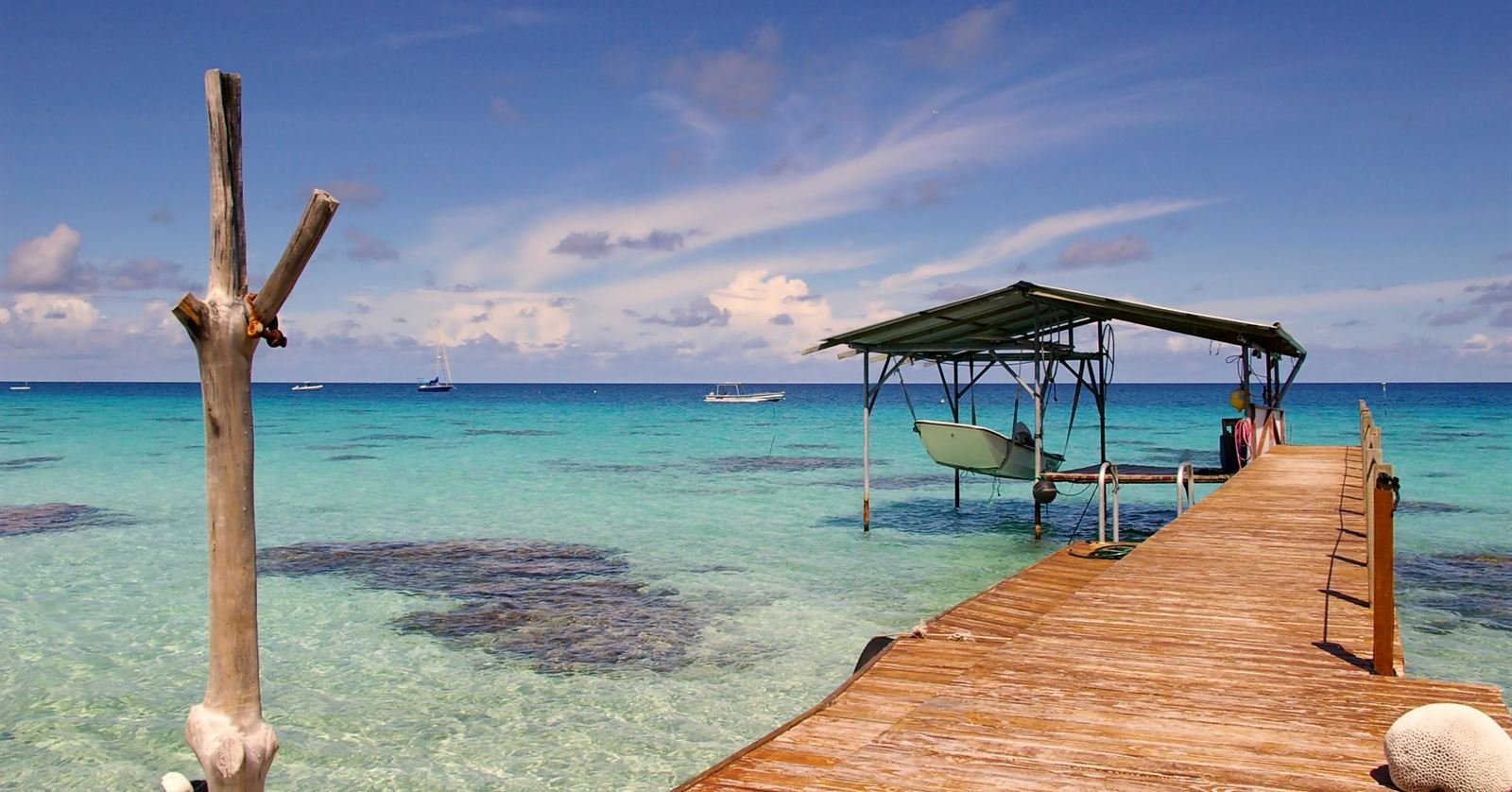
Jetty photograph: Fakarava-rotoava by Frédéric Jacquot, CC BY-SA 3.0, cropped and resized; this modified version is released under the same licence.

Join