French Polynesia · Practical
Tahiti, and the Four O’Clock Market
The market opens at four in the morning on Sunday, and by nine it is closing.
Not four for the traders and seven for everyone else. Four for everyone. By eight the best of it has gone, and by nine the whole thing is winding down for the rest of the day, because Sunday afternoon in Papeete belongs to church and family and not to you.
Almost every visitor to Tahiti sleeps through this. They land, they spend one night near the airport, and they fly out to Bora Bora the following morning having seen a car park and a hotel lobby.
Smart Summary
- Sunday market, four in the morning. It is the single best thing on the island and it has a five-hour window.
- Sunday is food only. The crafts, pearls and pareu stalls are a weekday proposition — go before late afternoon.
- Give Tahiti two days, not one. Everyone gives it one. That is why everyone says there is nothing here.
- The interior is the island. Steep, green, barely populated, and invisible from the coast road most people circle.
- The east coast has black sand, which surprises people who came for white.
The market
It has been on the same square in the middle of Papeete since 1847. The building you walk into is much newer — put up in 1989, reworked in 2006 and again in 2015 — a metal-framed hall with a mezzanine for crafts, and separate sections for fish, meat, fruit, flowers and pareu. Around half a million people pass through it in a year, and the overwhelming majority of them are Polynesian, doing their shopping.
That is the thing to hold onto. This is not a market that survives on visitors. You are welcome in it and you are not the reason it exists.
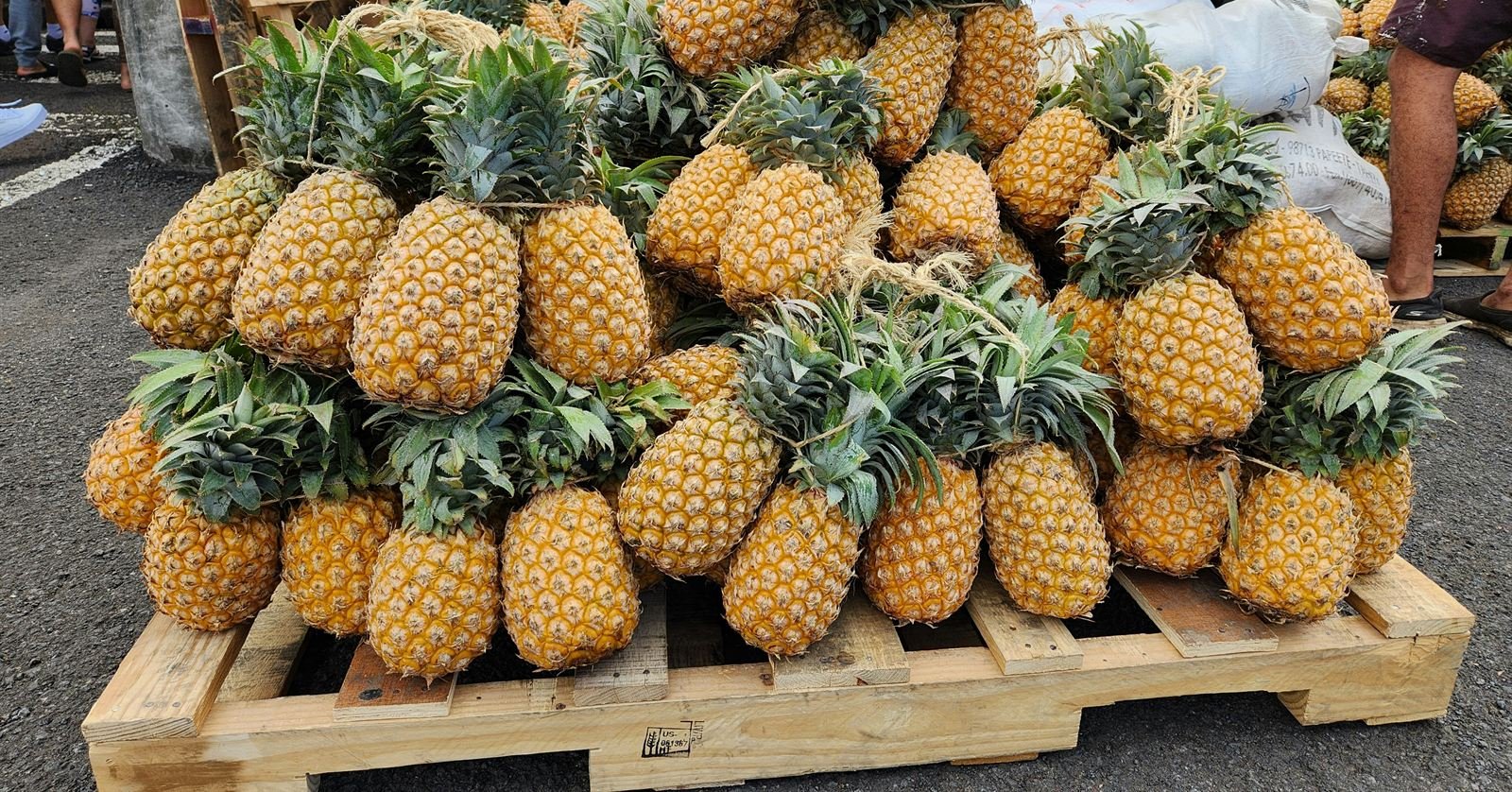
Sunday is the day. From four in the morning, growers come in from across the island and set up on the pavements outside, the surrounding streets close to traffic, and Tahitian families arrive to collect breakfast. What they are collecting: pua’a roti, roast pork with crackling; firi firi, coconut-milk doughnuts twisted into a figure of eight; ma’a tinito, the Chinese-Tahitian noodle and pork dish that tells you a great deal about who settled here; and raw fish in coconut milk, made that morning.
Come at six. At eight the good produce has gone and by nine the stalls are packing down.
What Sunday does not offer is the craft side. The pearls, the pandanus baskets, the tifaifai quilts, the vanilla, the hats — those stalls run on weekdays, and they close in the late afternoon. If you want both the Sunday morning and the crafts, you need two visits, which is one of several reasons two days on Tahiti is the right number.
Why the island reads as disappointing, and why that is a mistake
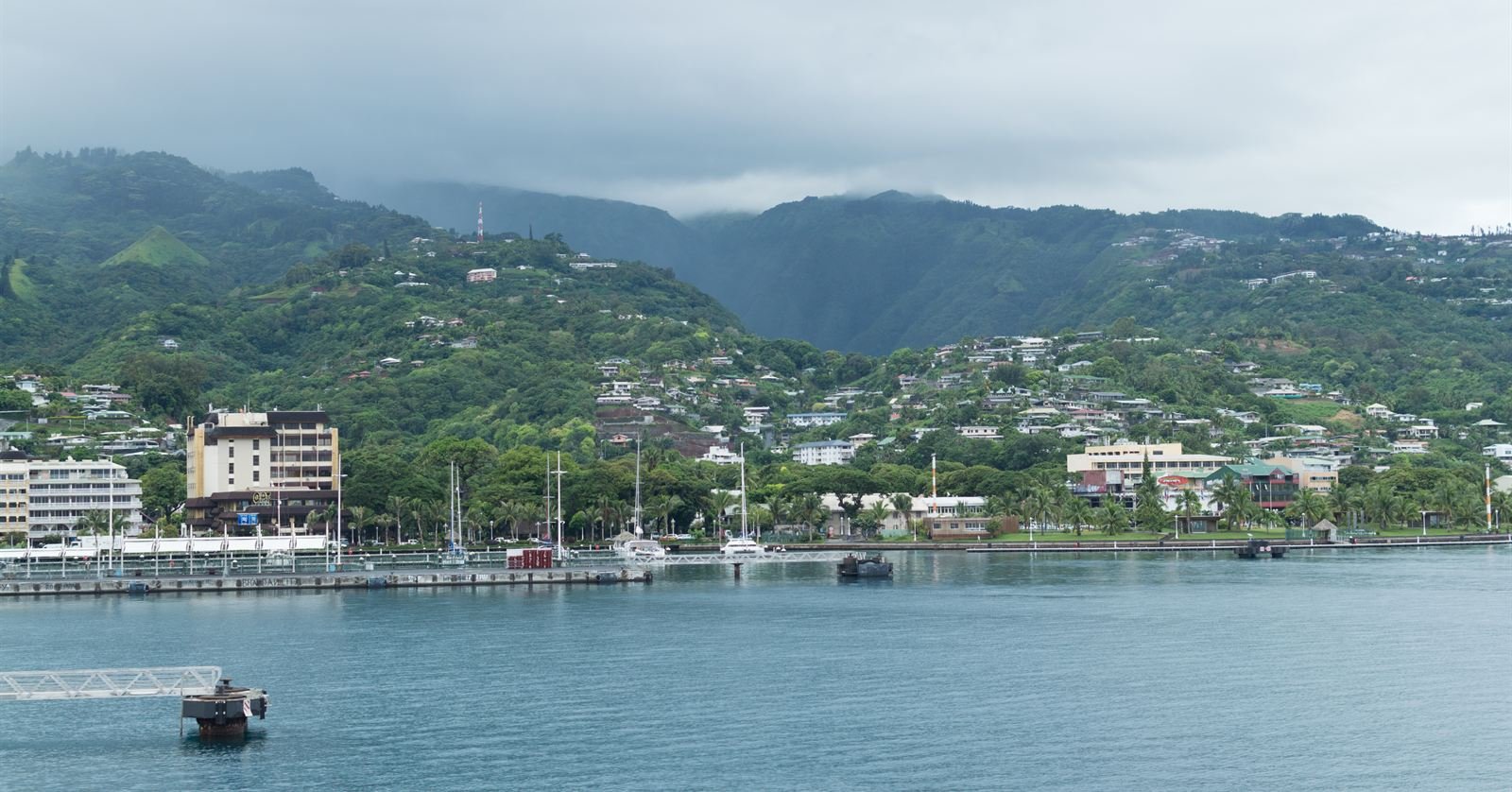
Tahiti is the arrival point for every trip to French Polynesia, which means it is the island people see when they are tired, disoriented, and mentally already somewhere else. It has a working city, traffic on the coast road, industrial edges around the port, and none of the immediate visual payoff of the islands in the brochure.
So the standard advice is to leave immediately. Land, sleep, fly on.
The problem with that advice is that Tahiti is where you can see how people in the territory actually live. It has the capital, the market, the university, the hospital, the traffic jam. Every other island you will visit is a place where the tourism economy is the economy. This one is not, quite.
If the point of travelling is to see somewhere rather than to be photographed in front of it, that distinction matters.
The interior, which almost nobody enters
Most visitors circle Tahiti on the coast road and conclude that the island is a ring of villages around a mountain.
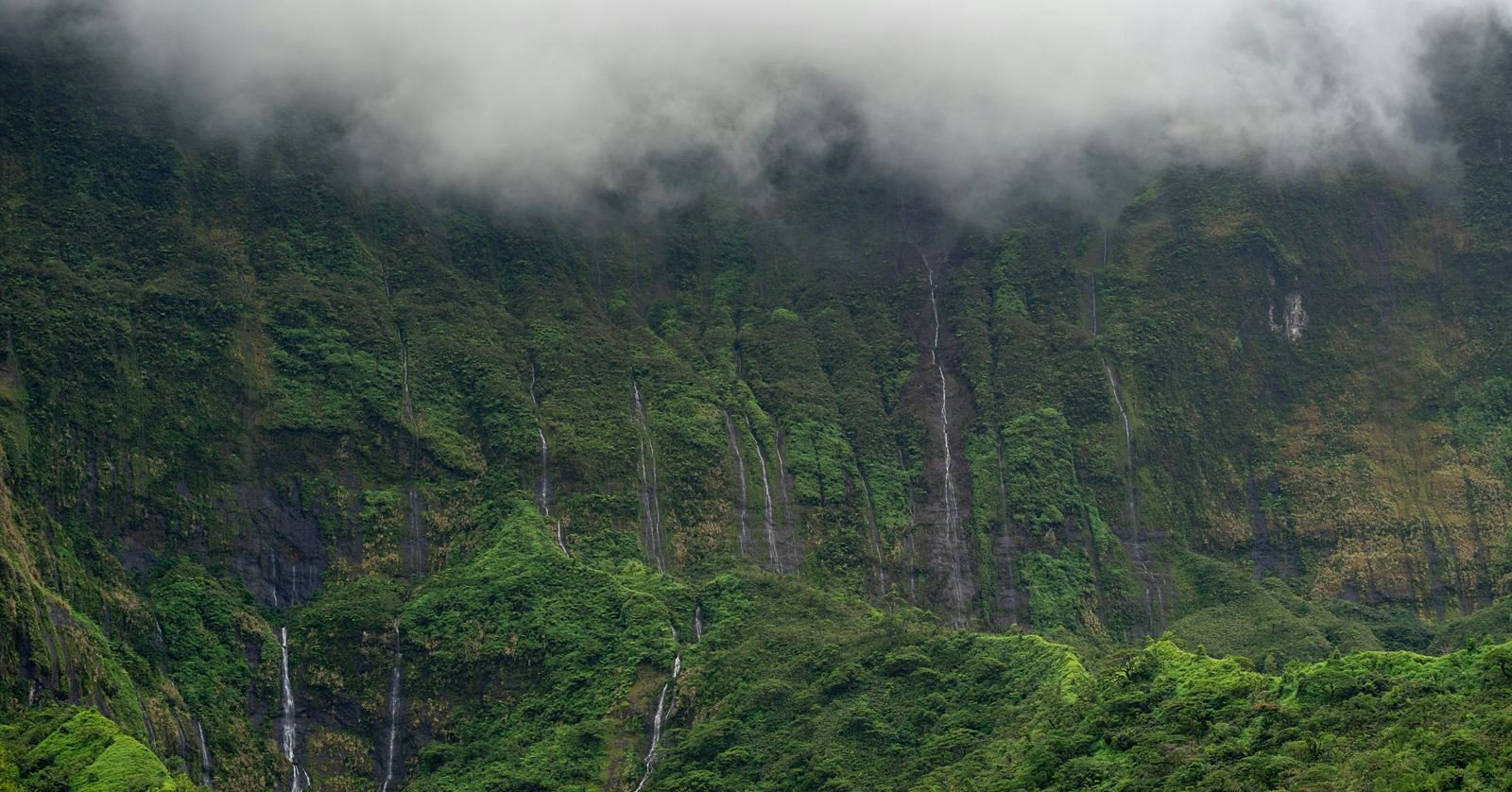
The mountain is the island. Tahiti is a young, steep volcanic mass with valleys running deep inland, waterfalls at the head of most of them, and a road network that essentially stops at the coast. Going inland requires either a guided four-wheel-drive trip up the interior track or a walk into one of the valleys behind Papeete.
Do one of them. It is a completely different island from the one visible at sea level, and it takes half a day.
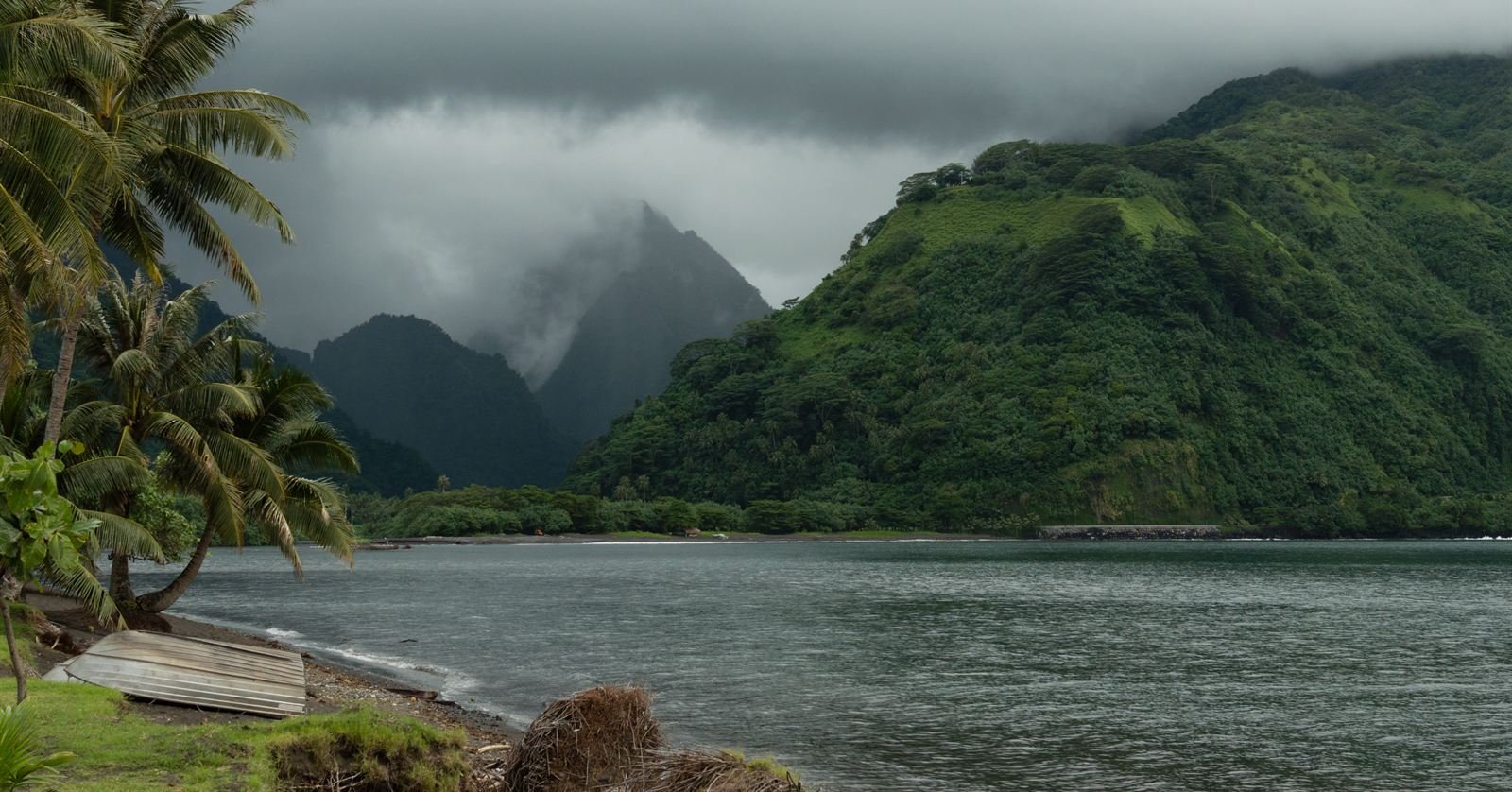
The east coast is the other half of the correction. The sand there is black — volcanic, coarse, and quite unlike the coral sand of the atolls — and the surf on that side is serious. The south-east, out towards the end of the island, is where the famous heavy reef wave breaks. You are not swimming there. You are looking at it, which is enough.
How we would spend two days
Arrive. Do nothing. Long-haul into this time zone flattens people, and the market will not reward you if you are broken.
Day one, inland. The interior or a valley walk in the morning, the coast road east in the afternoon, black sand and the reef.
Day two, Sunday if the dates allow. The market at six. Breakfast standing up. Then the rest of the day slowly, because everything else will be shut.
If Sunday does not fall right, go to the market on a weekday anyway for the crafts and the fish hall, and accept that you have seen the ordinary version of a good thing.
Where we would stay
Booking through these links may earn Sharp Voyage a commission, at no extra cost to you. It does not change what we recommend. How this works.
Almost everyone books Tahiti by proximity to the airport, for one night, and never thinks about it again. If you are giving the island two days, the question becomes which side of Papeete you want to wake up on.
Le Tahiti by Pearl Resorts is at Arue on Matavai Bay, ten minutes east of the centre, on nine hundred metres of black sand — the volcanic kind, which is the island’s own material rather than the coral sand shipped into the postcards. Ninety-one rooms and suites, every one of them facing the ocean. Three units are fitted for reduced mobility, one ocean view suite and two deluxe rooms, with paved routes and adapted bathrooms; it is the most detailed accessibility information we found in these islands.
InterContinental Tahiti Resort & Spa is on the other side, west of the centre near Faa’a and two kilometres from the airport — the practical choice if your Tahiti stop really is bracketed by two flights.
Hilton Hotel Tahiti is in Papeete itself, which is the one that matches the argument of this piece: you can walk to the market at half five on a Sunday morning rather than arrange a car for it. Its official list of amenities includes services and facilities for guests with reduced mobility. That is a line on a list rather than a description, so ask the hotel directly which rooms are adapted.
We have left the numbers out where the properties do not publish them. Two of the three tell you nothing about their size, and the figures you will find on the booking platforms are not confirmed by anyone who owns the building — on these islands that is a real risk rather than a technicality, and we would rather say nothing than repeat it.
One thing to expect on your bill. A local accommodation tax is collected by the property on top of the rate, and the territory is changing how it works: each commune sets its own scale, and the new system applies to stays from 1 January 2027. Any figure we printed today would be wrong by the time you travel, so we are not printing one — ask the property what it will be for your dates.
What we would skip
The one-night transit. It is the default and it produces the complaint that Tahiti is not worth stopping in — a self-fulfilling itinerary if ever there was one.
Sunday afternoon. Not a criticism, a fact. Much of Papeete closes and the correct response is to close with it.
Everyone arrives on this island and almost nobody looks at it. Get up at half five one Sunday, walk into a hall that has been in the same square since 1847, and eat roast pork among five hundred people doing their weekly shop.
Then go to Bora Bora.
Tautira photograph: Plage de Tautira by Jérémie Silvestro / Wikimedia Commons, CC BY-SA 4.0, cropped and resized; this modified version is released under the same licence.

Papeete photograph: Rade de Papeete by Jérémie Silvestro / Wikimedia Commons, CC BY-SA 4.0, cropped and resized; this modified version is released under the same licence.

Join