Amsterdam · Sensory
Amsterdam at the Hour the Water Goes Still
There’s a specific ten minutes, most evenings, when the canals stop moving.
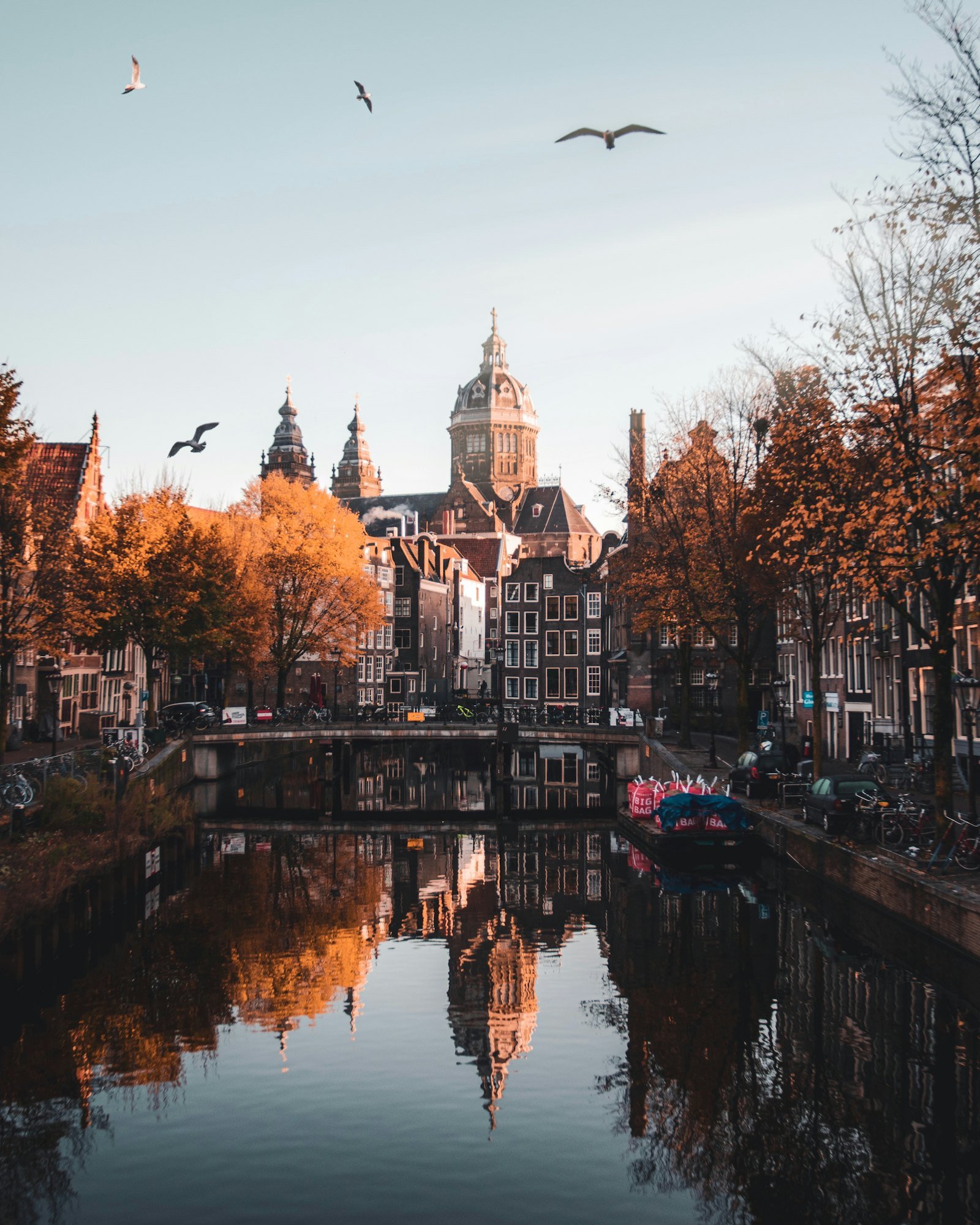
Boat traffic thins out after the dinner cruises finish and before the last of the bar crowd spills outside, and in that gap the water goes flat enough to hold a near-perfect reflection of everything above it — the houses, the bare trees in winter, the streetlights just starting to come on. We’ve stood on the same bridge on Reguliersgracht more times than we’d admit, mostly because it’s the one spot where you can see four other bridges lined up in a row, each one doubled in the water below.
The sound underneath the sound
Amsterdam has a particular acoustic signature once you tune into it: bicycle bells, the low hum of trams a few streets over, water lapping gently against houseboat hulls, and — this is the one visitors don’t expect — almost no traffic noise at all in the canal ring, because there’s barely any traffic to make it. Cars are a minority mode of transport here. What you hear instead is a city moving at bicycle speed, which has its own rhythm, less urgent than a car horn, more constant.
Sit on a bench along Brouwersgracht at golden hour and just listen for a while. It’s one of the few genuinely free things to do in this city that doesn’t feel like you’re settling for the free version of something better.
Rain, which you will get, and which is not a disaster
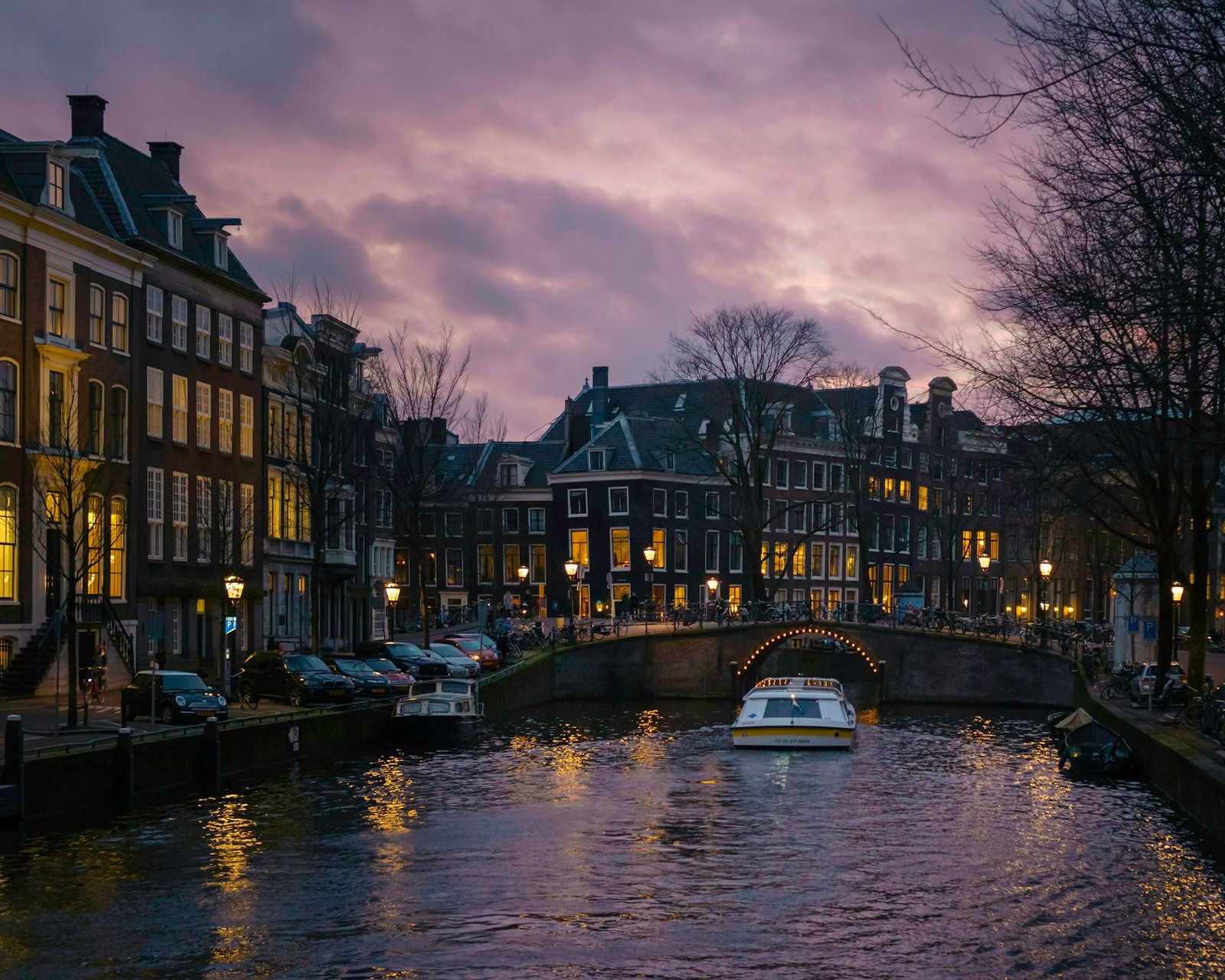
Amsterdam rain doesn’t announce itself the way storms do further south — it arrives lightly, on and off, sometimes for an entire afternoon without anyone bothering to open an umbrella. The city looks different wet: the cobblestones darken and start reflecting the same way the canals do, so on a rainy evening the whole street surface joins the water in doubling the light. Slightly worse for your shoes, genuinely better for the photographs you didn’t plan to take.
Don’t cancel plans for rain here. Almost nobody else does.
Winter light, briefly
Amsterdam’s winter days are short and low-angled in a way that flatters the canal houses more than summer light ever does — the sun barely clears the rooftops even at midday, throwing long shadows down the narrow streets for most of the daylight hours available. If you’re here between November and February, the golden hour effectively lasts most of the afternoon rather than the usual twenty minutes.
The houseboats, up close, at night
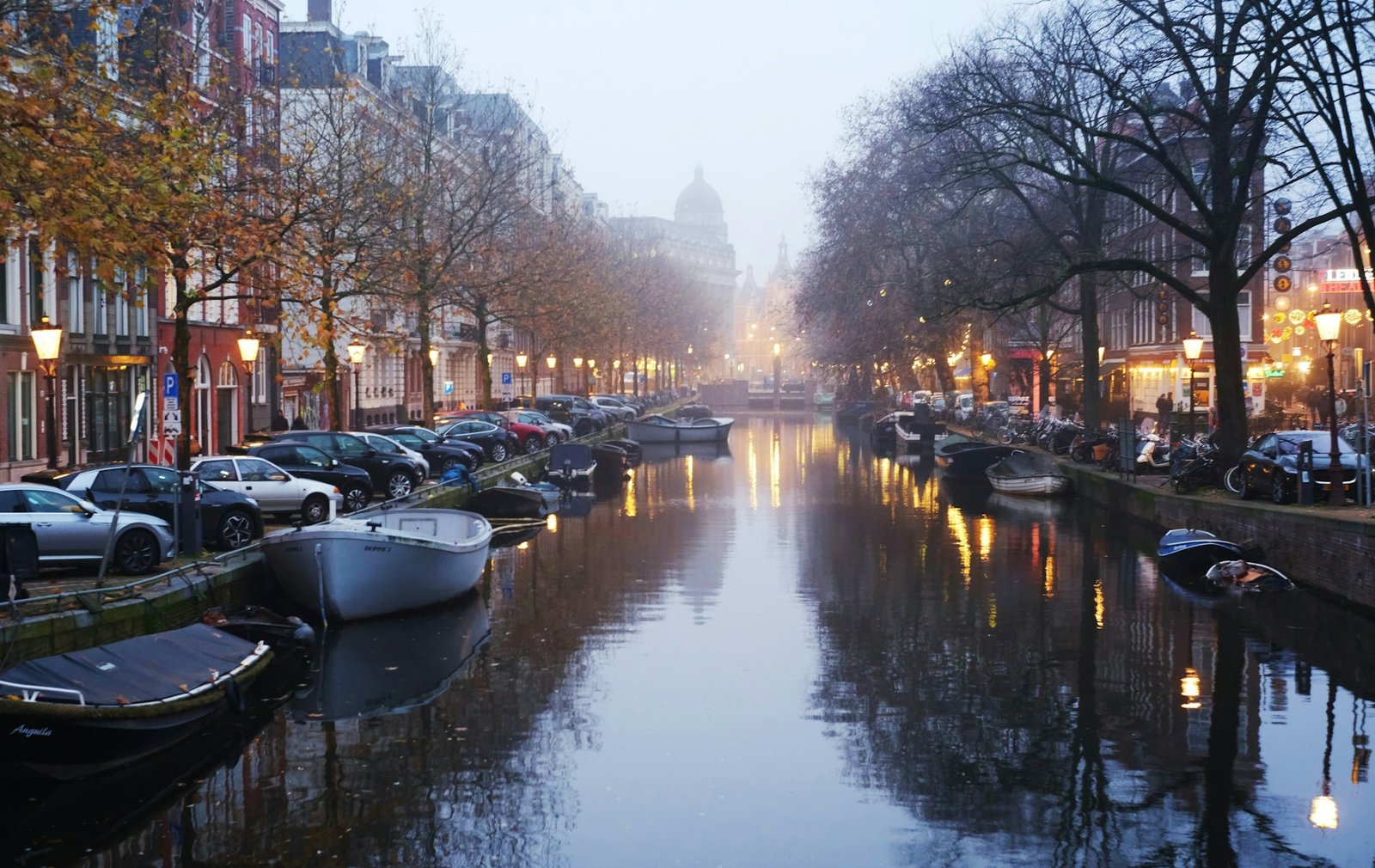
There are roughly 2,500 houseboats moored along the canals, and at night, with lights on inside and curtains left open — the same open-curtain habit that governs the houses on land — you get a strange, intimate view into a version of the city most visitors never register as actual homes rather than scenery. Walk slowly. Don’t linger outside any one window too long. But do walk it once at night, ideally somewhere quieter than the main tourist canals — Bloemgracht or the smaller stretches of Prinsengracht away from Anne Frank House — where the boats outnumber the foot traffic.
What we’d actually tell you to do with an evening like this
Walk without a destination, from Brouwersgracht down through Jordaan toward the canal ring, and let the light do the work. Bring a coat regardless of season — the water keeps the air a few degrees cooler than the rest of the city, and you’ll be standing still on bridges more than you plan to.
Join