Destinations · Practical
Lille, and the Weekend Not to Come
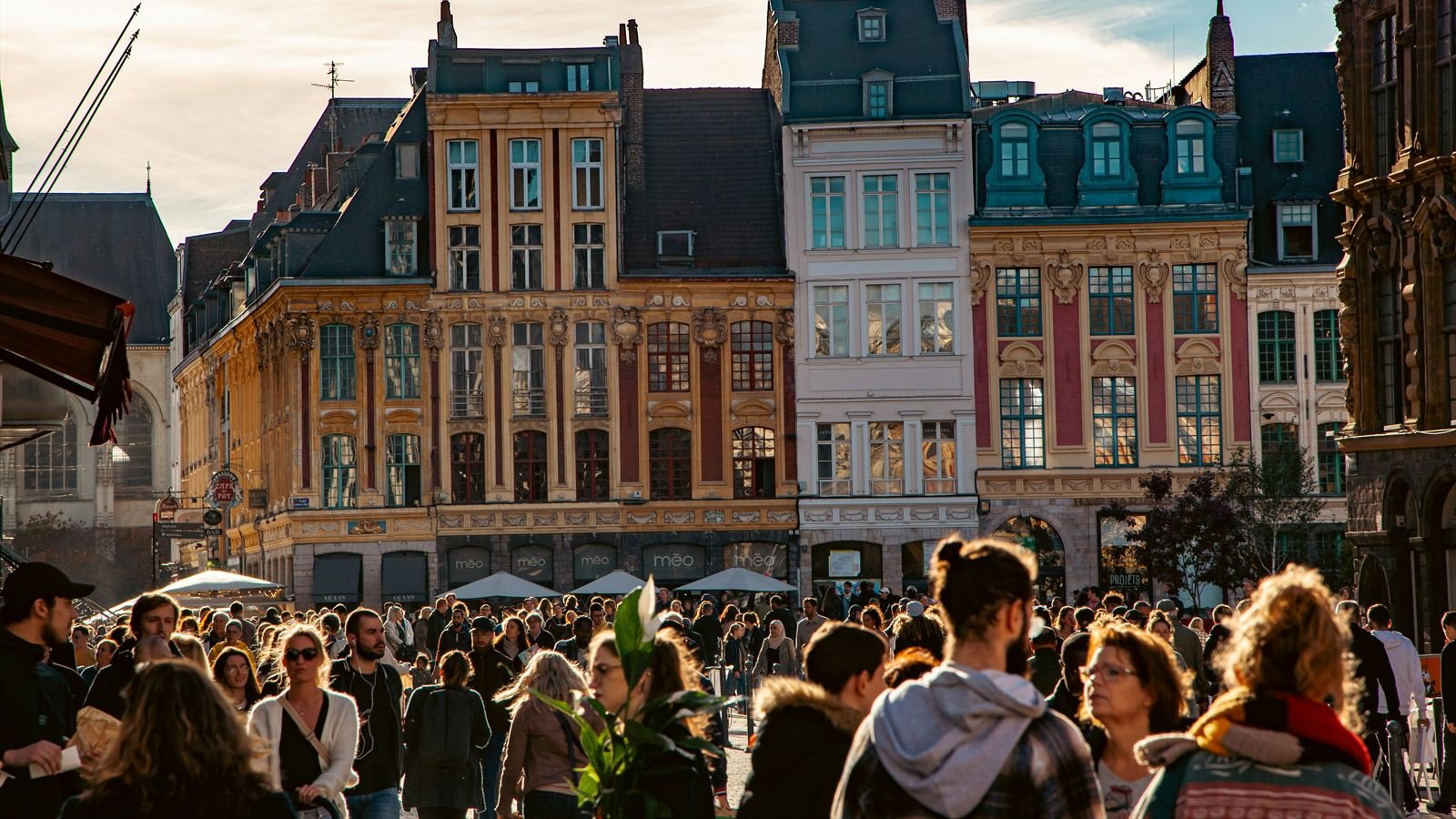
On the first weekend of September, Lille closes its centre to traffic, and a crowd that fills the whole of it arrives to buy each other’s old things.
The Braderie de Lille runs from eight on Saturday morning to six on Sunday evening. Thirty-four hours, no interruption. It is the largest flea market in Europe, it has been happening in one form or another since at least 1127, and it is genuinely one of the great civic events on the continent.
Do not come for it.
About that weekend
We are not being snobbish about the Braderie. It is a remarkable thing — stalls running through the whole city, restaurants dragging their tables onto the pavement, and the local tradition of eating mussels and chips until the discarded shells form heaps on the kerb, which are then judged competitively. Everyone should see it once.
But it is a festival, not a city break. For two days Lille stops being a place you can walk around, eat in without queuing, or see anything of. The belfry closes for it — the one UNESCO-listed building in the city, shut for the two days the largest number of people are standing underneath it. If what you want is the Braderie, come for the Braderie and accept that you will see nothing else. If what you want is Lille, come literally any other weekend of the year.
The distinction matters more here than in most cities, because Lille is small enough that one event genuinely swallows it.
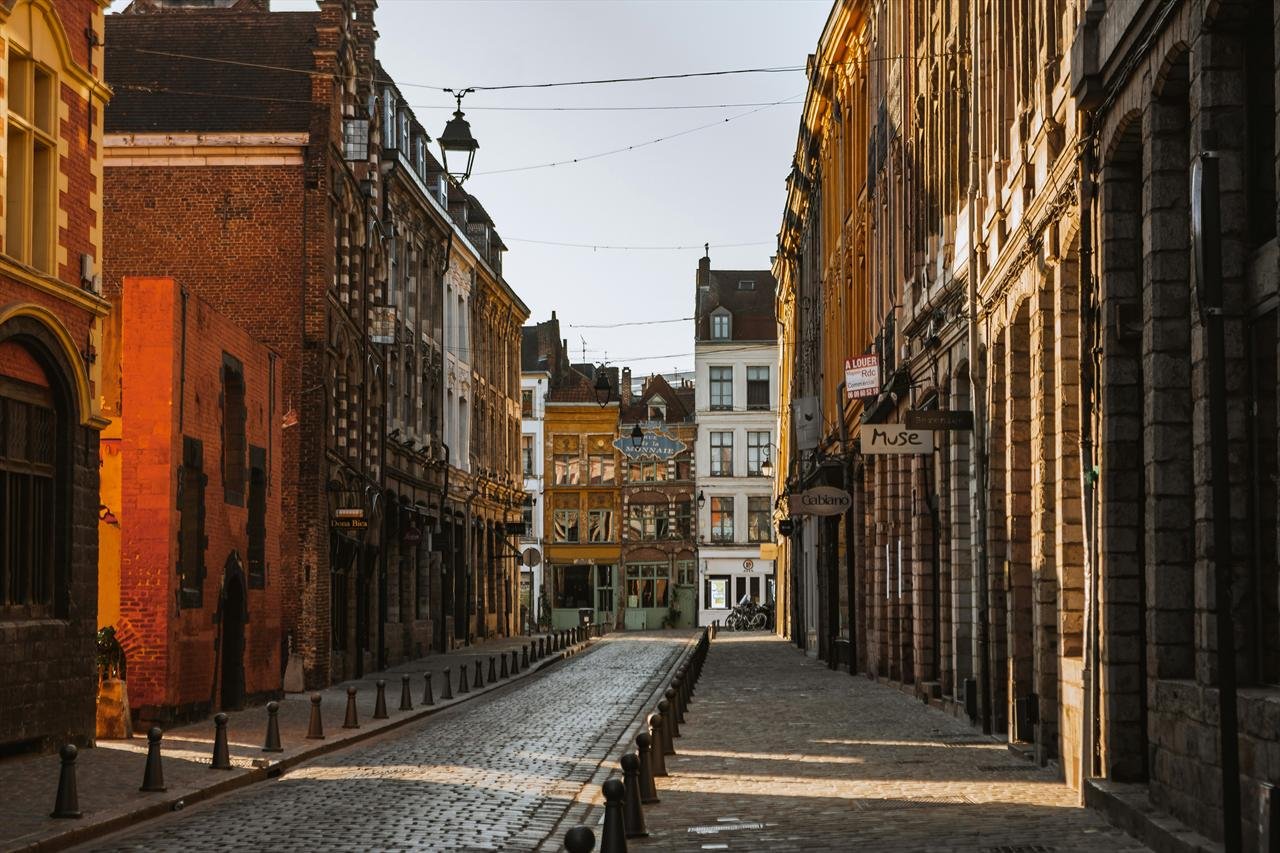
Why it is worth the hour and twenty minutes
The Palais des Beaux-Arts. The tourist office claims it is the richest fine art collection in France after the Louvre. Rubens and Van Dyck, Goya, Delacroix. Rodin, Claudel, Carpeaux.
And somewhere in it, something stranger and better: Vauban’s relief models of the fortified towns of the north, built in the seventeenth century as military planning instruments and now enormous, obsessive scale models of places you can still drive to.
The building is 1890s, grand and slightly overbearing, and was gutted and rebuilt internally in the 1990s. Give it half a day.
It is being reworked again now — the museum’s own notice runs to 2027 — so check what is actually open before you plan around any one room.
Roubaix, which is the actual reason to come
Half an hour out on the metro, in a town that made an enormous amount of money from textiles and then lost it.
The metro is the obvious way and the slow one. A TER from Lille Flandres does the same trip in ten minutes, and a same-day TER ticket drops the entry at La Piscine from eleven euros to nine.
La Piscine was a public swimming pool in Art Deco style, closed decades ago and reopened as a museum. The collections are art and industry — painting, sculpture, ceramics, and a great deal of textile. The pool itself is still there, with sculpture ranged along the water and the old showers and changing cubicles turned into display cases. It should not work. It works completely.
Closed Mondays. Open until eight on Fridays — and free to everyone from six to eight, which is the best two hours in the building and the ones almost nobody uses. Note the weekend: it does not open until one on Saturdays and Sundays, so a weekend day in Roubaix does not start in the morning.
Villa Cavrois, in neighbouring Croix, was built in 1932 by Robert Mallet-Stevens for Paul Cavrois, a Roubaix textile industrialist. It is one of the most important modernist houses in France. It was requisitioned as a barracks during the war, then abandoned and looted for decades before being restored.
A combined ticket covers both and is valid a month, which is generous. It is sold only at the two sites themselves — no online purchase — so buy it at whichever you visit first.
When to go
Any weekend except the first one in September. We have made this point.
Beyond that: Lille is a northern European city with northern European weather, and it is at its best from late spring to early autumn, and again in December when the Christmas market fills the Grand Place and the whole thing becomes Flemish in a way it only half is the rest of the year.
The closing days do not line up, and that matters more than it sounds. Monday closes Roubaix completely — both La Piscine and Villa Cavrois — and the Palais des Beaux-Arts does not open until two in the afternoon. Tuesday closes the Palais, but Roubaix is working. There is no single dead day, but a Monday morning here comes close.
What we would skip
A day trip. Eurostar puts St Pancras an hour and twenty minutes away — 1h22 on its own timetable — which makes it tempting and it is a mistake. The train is direct, with no change, and arrives at Lille Europe. The Palais des Beaux-Arts alone eats an afternoon, and Roubaix is a separate day. Two nights is the shape of it.
Where to stay: three answers to different questions
Booking through these links may earn Sharp Voyage a commission, at no extra cost to you. It does not change what we recommend. How this works.
We’re not going to rank these. They don’t compete — they answer different questions about what a night in Lille is for.
If the question is old Lille, done properly, it’s the Clarance, a townhouse built in 1736 for the Comtesse d’Hespel, tucked into the quiet end of Vieux Lille. Twenty-seven rooms, one Michelin star at La Table, currently under chef Gaëtan Citerne.
If the question is history you can actually feel, it’s the Hermitage Gantois — a hospice built in 1462 that took in the sick and the elderly for over five centuries, right up until 1995, before becoming a hotel in 2003. The rooms wrap around courtyards and gardens rather than corridors. We’d tell you how many there are, but the hotel itself doesn’t say — five room categories, no total, and we’re not going to borrow one from a booking site that isn’t the source.
If the question is something Lille hasn’t seen before, it’s the Oceania Les Augustins — not, despite the name, a former convent. The convent came first and gave the street its name; what you’re actually sleeping in is the 1928 Art Deco headquarters of the Scalbert-Dupont bank, by the Lille architect Jean Delrue, the same period and register as the swimming pool we sent you to in Roubaix. Eighty-seven rooms, opened in 2025, and a pool set into what used to be the vault.
Lille is a city most English speakers pass through at speed on the way somewhere warmer, and it has one of the great art collections in France, an Art Deco swimming pool full of Camille Claudel, and a modernist masterpiece in a suburb.
It also has one weekend a year when none of that is accessible. Now you know which one.
Join