Swedish Lapland · Itinerary
Where to Stay for the Northern Lights in Sweden
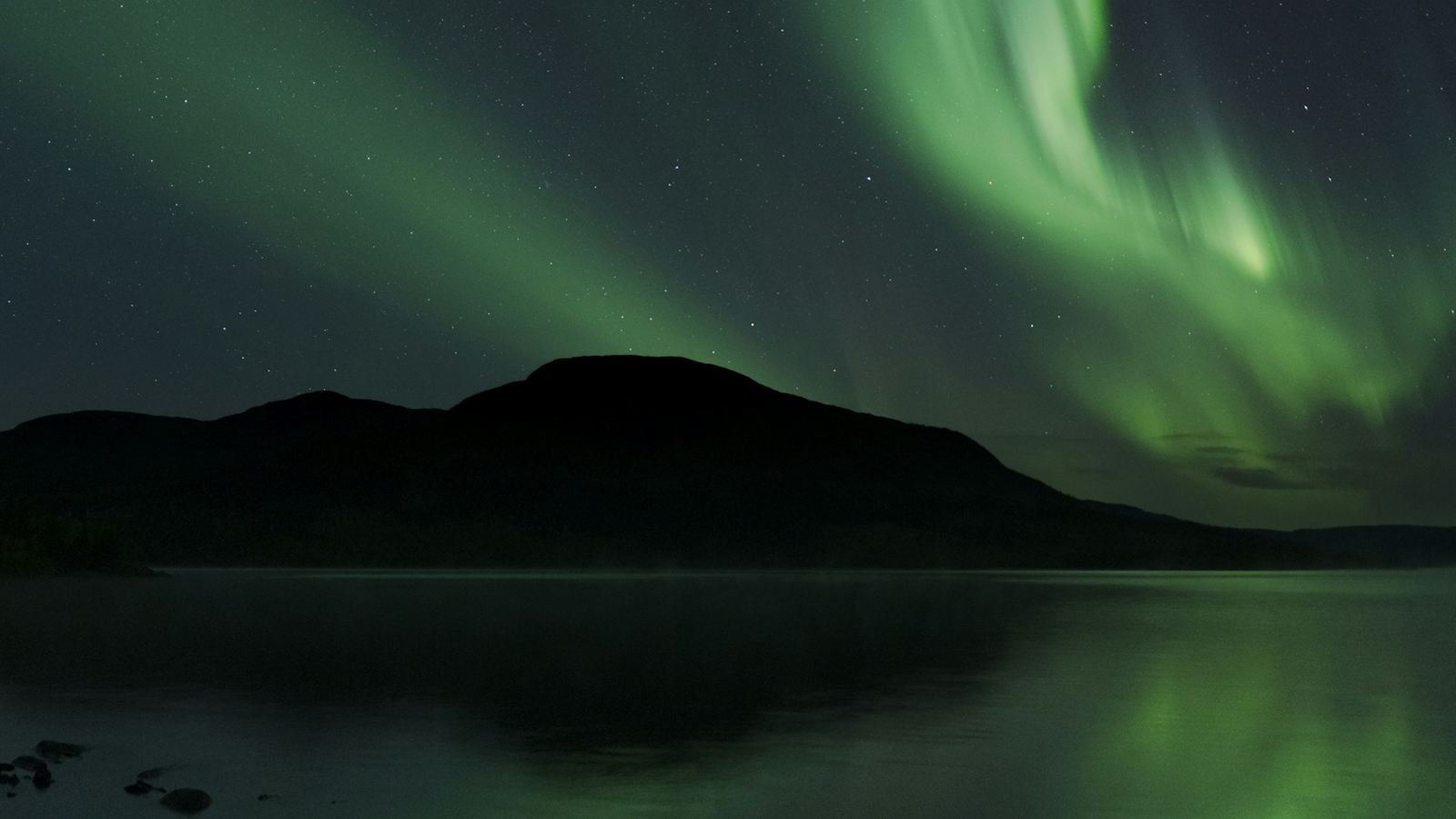
Almost every guide to the aurora tells you where to look. Very few tell you where to sleep, which is strange, because your bed is the only variable in this equation you actually control. You cannot influence the sun. You cannot argue with a cloud front. You can decide, months in advance, how many clear nights your pillow will sit under and whether you can watch from it without putting on four layers first. That decision is worth more than any tour you will book on arrival.
The rain shadow is the entire argument
Abisko sits in a hole in the weather. Atlantic systems hit the Norwegian coast, dump their moisture climbing the mountains, and arrive over the Torneträsk basin wrung out.
The Swedish meteorological office puts numbers on it. Abisko’s normal annual precipitation for 1991–2020 is 347.2 mm. Its April normal — 11.4 mm — is the lowest monthly precipitation normal recorded at any station in Sweden. The wettest Swedish station on the same measure collects nearly four times Abisko’s annual total.
That is the reason to book here rather than on the Norwegian coast. Tromsø has better restaurants and a far better airport. It also has weather. If you have three nights and a fixed budget, the drier sky wins on arithmetic alone. It is why our Lofoten piece ends up treating the aurora as a detour from a longer trip rather than a reason to make one: on that coast you plan around the lights, not for them.
The corollary matters more. Because the advantage is geographic rather than seasonal, you do not need to chase. Most aurora holidays are sold as pursuit — a minibus, a guide, four hours of driving to find a gap in the cloud. In the Torneträsk basin the gap is usually where you already are.
The sun is quieter now, and that should change what you book
Solar Cycle 25 peaked around October 2024. We are in the declining phase, which means fewer of the enormous, headline-grabbing storms that filled everyone’s feed in 2024 and 2025.
This is less bad news than it reads. Declining-phase activity is driven more by coronal holes than by explosive flares, and coronal holes rotate with the sun on a roughly 27-day cycle — they recur, predictably, for months. NOAA publishes a 27-day geomagnetic outlook precisely because of it. Storms are more moderate and more frequent.
So the strategy shifts. You are no longer betting on catching one spectacular night. You are accumulating nights. Book four, not two, and book somewhere you would not mind being stuck.
The four we would actually book
Booking through these links may earn Sharp Voyage a commission, at no extra cost to you. It does not change what we recommend. How this works.
STF Abisko Turiststation is the correct answer for most people and we are slightly bored of saying so. It sits in the northern part of Abisko National Park, five minutes’ walk from the train platform, and the chairlift up Mount Nuolja to the Aurora Sky Station leaves from the property. There are 377 beds across the main building, the Keron hostel and the cabins, which tells you what kind of place it is. Rooms are functional rather than lovely. You are paying for coordinates.
Abisko Mountain Lodge, in the same village, is the version for people who care what they eat — its kitchen, Brasserie Fjällköket, is the reason to choose it over the mountain station. Small enough that the staff will tell you when something starts.
Hotell Fjället, up the valley at Björkliden, is a ski hotel and reads like one: panoramic lobby, billiards, a country store. It earns its place for one feature, which is a sauna facing Lapporten. Sitting in it while the sky works is the single best-value thing in this article.
Loggers Lodge, down near Harads, is a cabin for two on exclusive use. No neighbours, no lobby, no other guests, a private chef. It is by some distance the most expensive way to do this and the only one where you never see another traveller.
We book a fifth place, on the north shore of the lake, that we are not going to name here. It is let privately, it is not listed anywhere, and the reason it is still good is that nobody has written it up. That is the whole point of it.
What to skip
The Icehotel, for aurora purposes. It is a genuine piece of ice architecture and worth an afternoon — we make the case for it in its own piece. But the cold rooms are kept below freezing and have no windows, and you are asleep inside a sculpture while the sky does the thing you flew for. Stay somewhere warm. Visit the ice.
Tour-only trips. A single guided chase on a cloudy night is a coin flip you paid for. The Aurora Sky Station night visit is the exception worth the money: it runs 19 October 2026 to 15 March 2027, from 21:00 to no later than 01:00, with a guide who can read the sky. Book it once. Spend the rest of your nights outside your own door.
Midwinter, if you have a choice. At this latitude the sun does not clear the horizon at all for roughly a month around the solstice. It is atmospheric, and it is also relentlessly dark and short on anything to do between displays. Late February and the first half of March give you aurora and daylight both.
Getting there is the friction nobody mentions
Kiruna airport is about 100 km from Abisko, roughly an hour and a quarter by road, connecting through Stockholm. If you are routing through anyway, the town itself is worth a night rather than a connection.
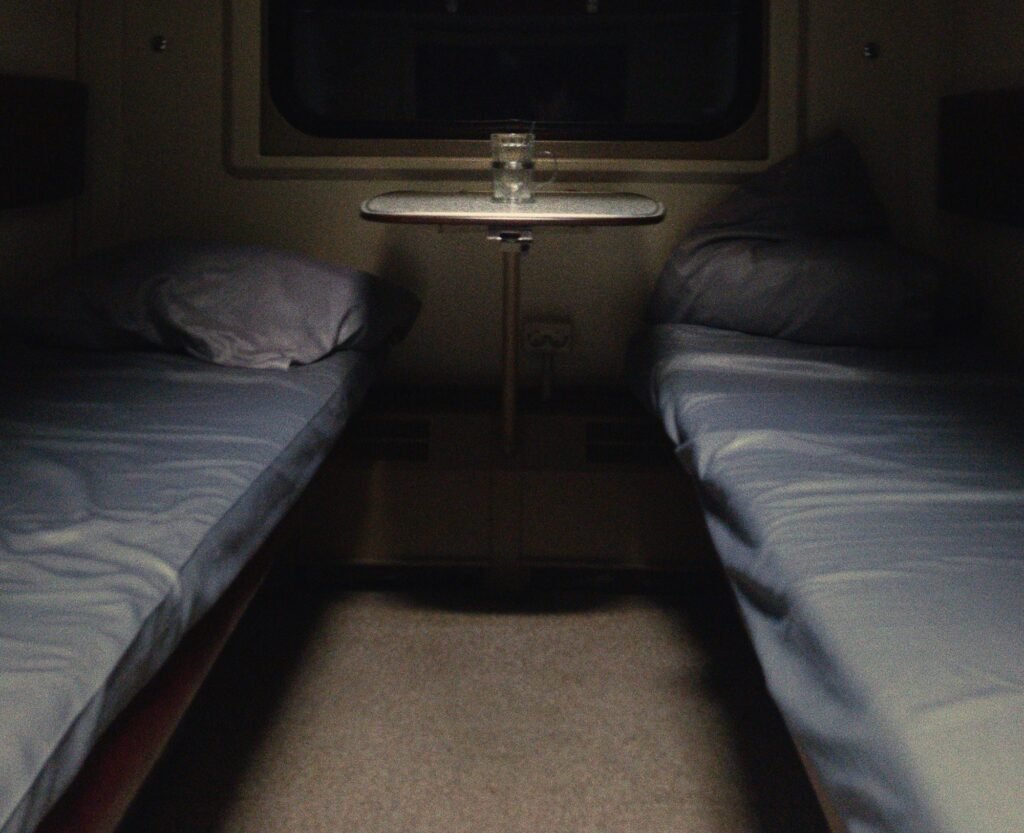
The train is the better story, but check your date. Trafikverket halved night train services north of Umeå from 13 April 2026, cutting the Stockholm–Narvik line from two daily pairs to one, and the through service went with it. Search a November or early-December 2026 departure and what SJ actually sells you is the 18:12 out of Stockholm, into Boden at 05:42, twenty-five minutes on the platform in the dark, then 06:07 onward and Abisko at 10:43. Sixteen and a half hours. A sleeping compartment starts around 1,700 SEK. It works, and it is not the single unbroken train you pictured.
That should change. Trafikverket has awarded SJ a directly procured contract restoring through couchette and sleeping cars between Stockholm and Narvik from December 2026 to 2028, and the timetable turns over on 13 December — which is, not coincidentally, the first date SJ has not yet opened for sale. So most of the 2026/27 season should be back to one train, with October to mid-December the stretch to check twice. Beyond 2028 a further procurement is planned at the reduced service level. Nobody should assume today’s timetable is permanent.
Book a sleeping compartment rather than a couchette either way.
One last thing
The people who see the most aurora are not the ones with the best forecast app. They are the ones who booked the fourth night, stayed put, and could get from bed to sky in under a minute. Choose the room that makes that easy, and the rest tends to take care of itself.
Join