Stockholm · Sensory
Stockholm in June, After Ten at Night
Nobody tells you about the light until you’ve seen it once, and then you can’t stop mentioning it to people who haven’t.
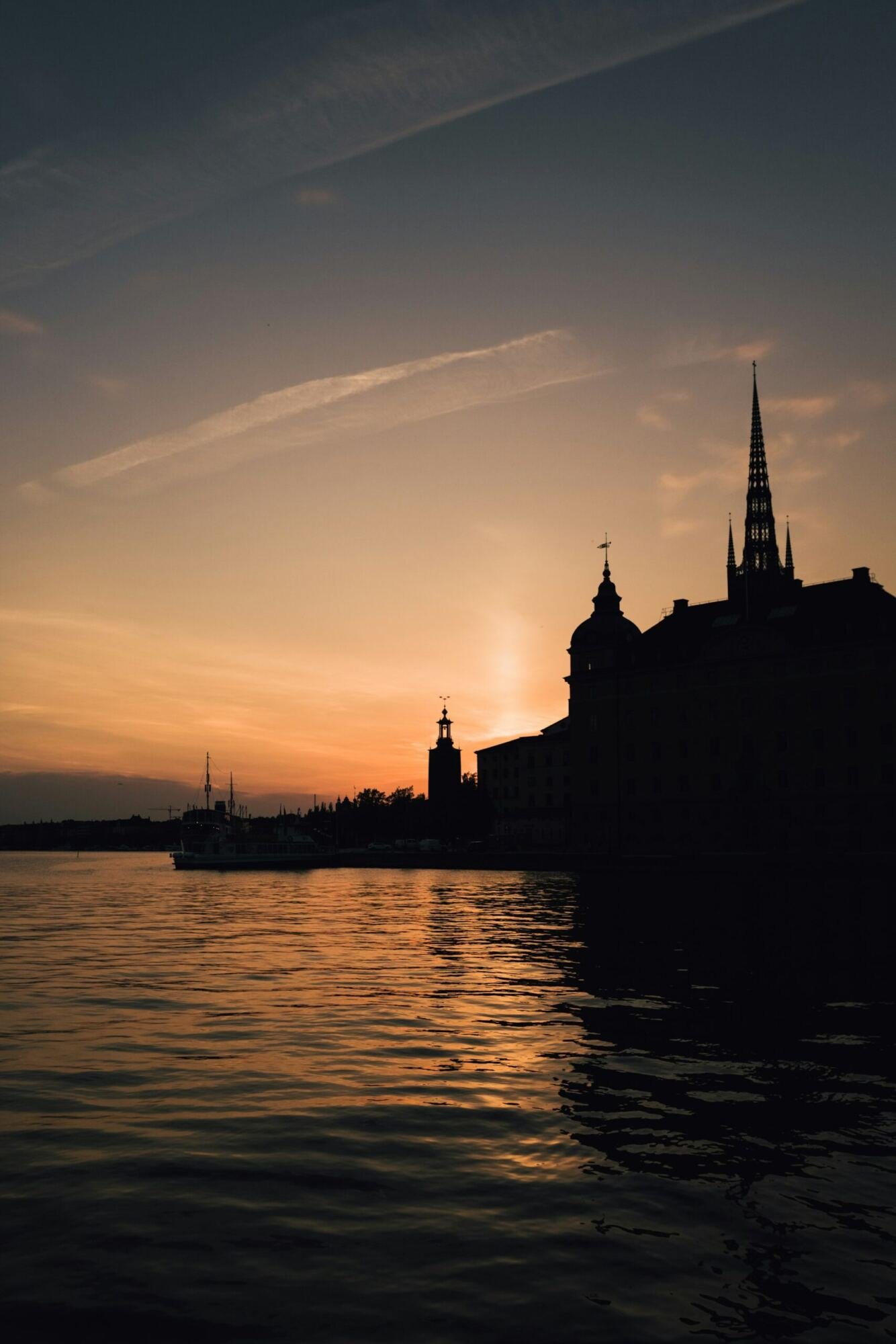
In June, the sun doesn’t really set so much as lean sideways for a few hours before coming back up. By ten at night the sky is somewhere between gold and a colour that doesn’t have a name in English, and the water — Stockholm is mostly water, more than most cities admit to being — holds all of it, doubled.
We were on Skeppsholmen the first time we noticed it properly. No plan, just walking after a late dinner, and the island — small, mostly empty at that hour, a naval base turned quiet park — had gone completely still except for the water against the rocks. A couple of joggers. A man fishing off the end of a pier, not talking to anyone, not appearing to want to. It’s a different island entirely from the one you’d pass through on a first Stockholm weekend, which tends to stay closer to Gamla Stan and the ferry queues.
The sound of a city that isn’t performing
Stockholm at that hour doesn’t sound like a capital city. There’s traffic somewhere, presumably, but from the water it doesn’t reach you. Mostly it’s gulls, and the particular clean sound of a small boat engine crossing open water, and occasionally, from one of the outdoor tables that stay open past midnight in summer, the specific quiet of people who aren’t trying to be heard by anyone but the person across from them.
This is the thing about Swedish reserve that reads as coldness to visitors and isn’t, quite. It’s closer to a kind of social quietness — voices pitched low by default, laughter that doesn’t carry, a general sense that other people’s evenings aren’t your business. The city sounds the way it looks: contained, not withheld. That’s the same restraint Stockholm’s best interiors run on, just translated into sound instead of furniture.
Granite, water, and the particular grey of both
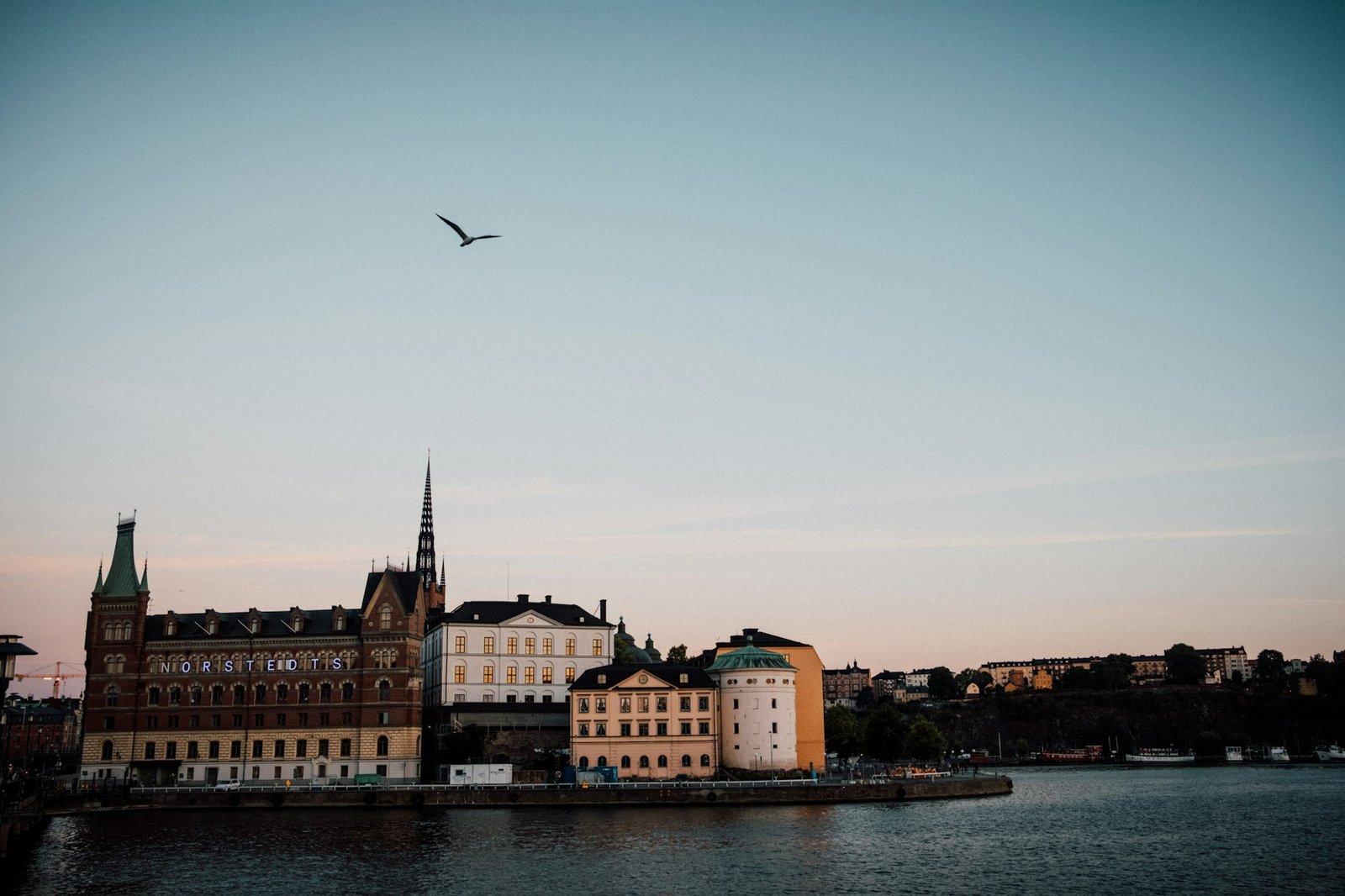
Stockholm’s colour palette, if you had to reduce it to three things, is granite grey, Baltic blue-green water, and the burnt ochre of the old town facades — and almost everything you photograph here ends up being some combination of the three. The light does something specific to grey granite in the evening that it doesn’t do at midday; it goes almost violet at the edges, particularly on Riddarholmen, the small island next to Gamla Stan that most visitors walk past without stopping. It’s a gentler version of the same far-north light that turns Lofoten’s winter skies into something else entirely.
What we’d actually tell you to do with an evening like this
Nothing structured. Buy something from a late-opening bakery — cinnamon buns if you can still get them warm, which by evening you usually can’t, and that’s fine too — and walk the waterline from Skeppsholmen toward Djurgården as the light does what it does. There’s no destination in this that matters more than the walking itself.
If it’s cold — and Stockholm evenings in June can still surprise you — the discomfort is part of it. Bring a coat you don’t mind not needing for most of the day and needing entirely by ten.
This isn’t a season that photographs the way it feels. Most people give up trying after the first evening and just stay out later instead.
Join