Amsterdam · Itinerary
Amsterdam, Away From the Water You Know
Everyone photographs the same three canals. We stopped going to any of them years ago.
Amsterdam has a problem most cities would kill for: it’s too easy to love badly. You can spend three days here doing exactly what the postcards show you and leave thinking you’ve seen it, when really you’ve seen the four square kilometres every tour bus also stops at. This isn’t a guide to those four kilometres. It’s what we actually do when we’re back.
Friday: land, and go straight to Jordaan
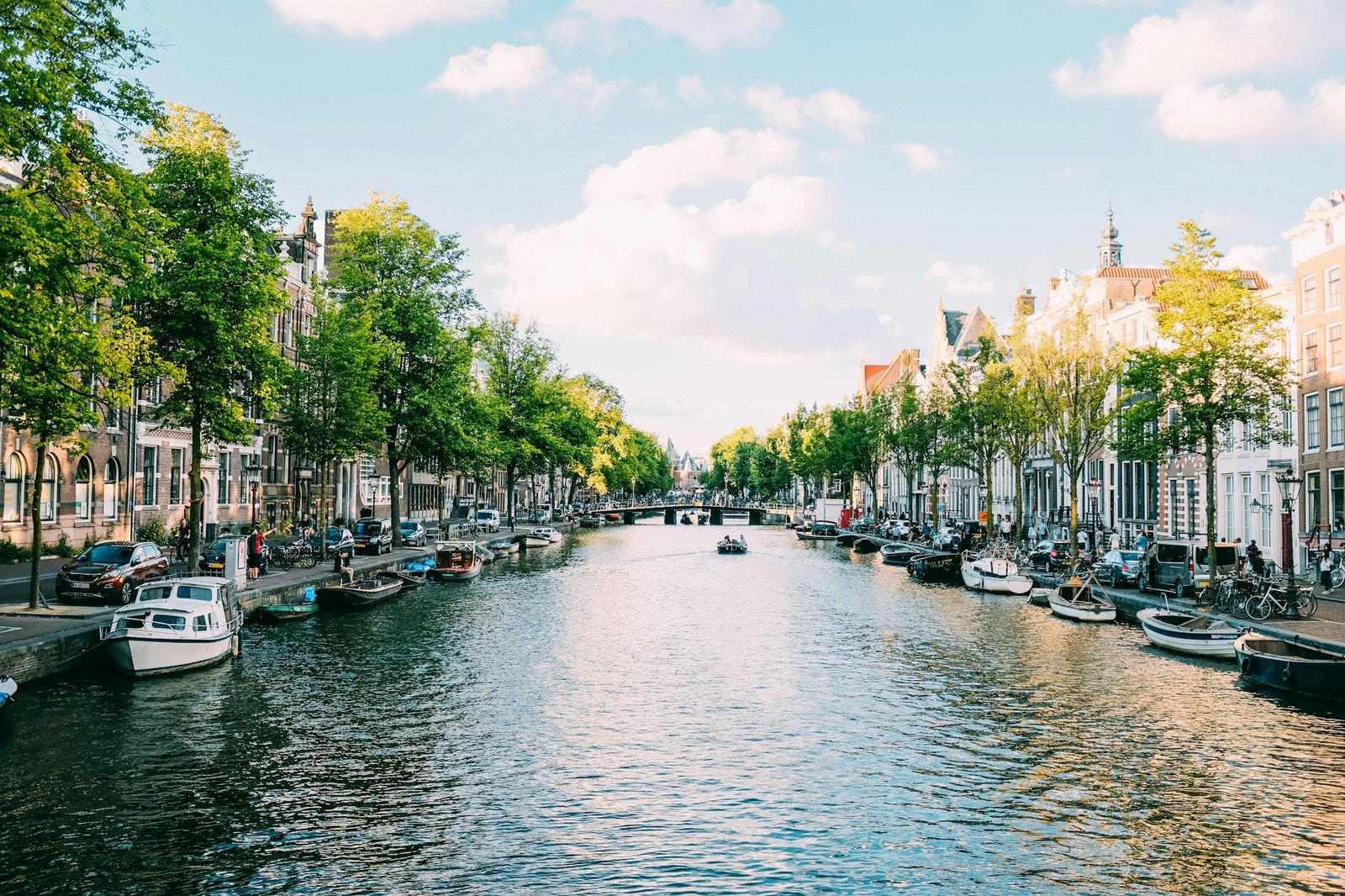
Skip the hotel check-in ritual if you can — drop the bag, walk out. Jordaan in the late afternoon, before the dinner crowds arrive, is the neighbourhood that convinces people Amsterdam is still a city people live in rather than a city people visit. Narrow streets that don’t run in straight lines, laundry actually hanging from actual windows, a corner bar every fifty metres that hasn’t redecorated since the 1980s and has no plans to.
We usually end up at one of the bruin cafés — brown cafés, named for the tobacco-stained walls nobody’s bothered painting over — with no particular plan beyond a beer and watching the street. Don’t ask us which one. They’re all roughly the same in the way that matters, and the specific one you land in becomes yours by accident, which is sort of the point.
Stay somewhere on a residential canal rather than near the centre — the difference in what you hear at night is the whole difference in the trip.
Saturday morning: the market before the market gets busy
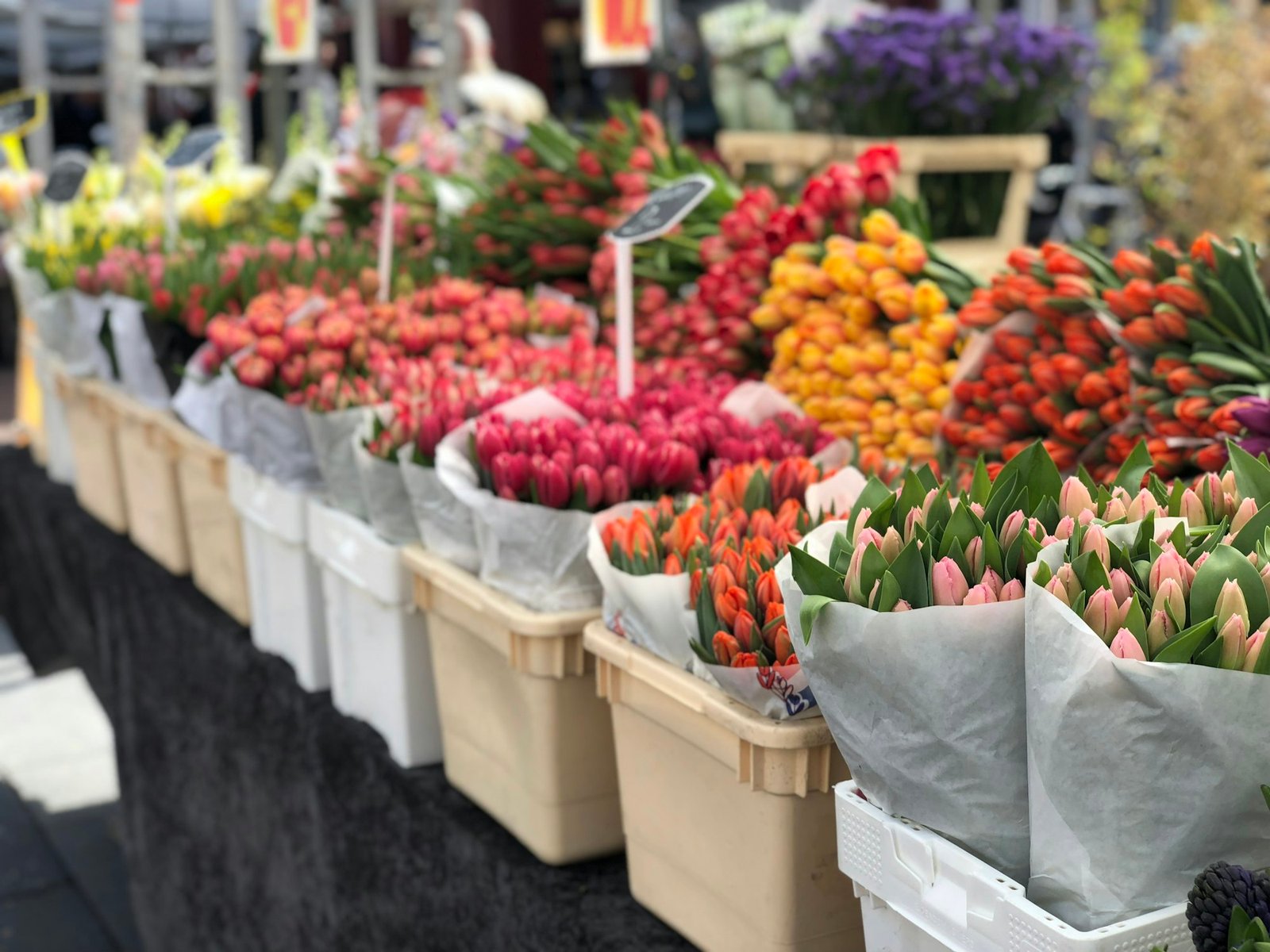
Noordermarkt runs a farmers’ market on Saturdays, and it’s worth being there by nine, not for the produce particularly but for the version of the square that exists before it fills — locals with actual shopping lists, not itineraries. The organic cheese stall has a queue by ten regardless of the weather. Join it or don’t; either way, walk the perimeter of the square once before deciding.
From there, the Nine Streets (De Negen Straatjes) connect Jordaan to the canal belt in a grid small enough to walk without a map. Independent shops, mostly — the kind that survive on regulars rather than tourists, which is increasingly rare this close to the centre. We’re not going to list which ones. They rotate, and half the appeal is not knowing what’s going to be in the window.
Saturday afternoon: the museum you’re allowed to rush, and the one you’re not
The Van Gogh Museum deserves the two hours everyone gives it. Book the slot in advance — same-day tickets in summer mean queuing outside in weather that Amsterdam does not owe you kindly.
The Rijksmuseum, on the other hand, we’d tell you to be more selective about. It’s enormous, and trying to see all of it in an afternoon means seeing none of it properly. Pick a wing. The Gallery of Honour, where The Night Watch hangs at the end of a room built specifically to make you walk toward it slowly, is worth the visit on its own — everything else is a bonus if you have the legs for it.
If museums aren’t the point of your trip, skip both and walk the Museumplein lawns instead on a clear day. Half the city seems to have the same idea, and there’s something honest about that.
Either way, the ten minutes north of the Rijksmuseum are worth taking on foot. The Spiegelkwartier — Nieuwe Spiegelstraat and the Spiegelgracht, running up towards the Keizersgracht — is where the city keeps its art and antiques trade, something like a hundred dealers inside a few hundred metres. You are not going to buy a seventeenth-century Delft charger on a weekend away. Look in the windows anyway. It tells you more about what this city has historically valued than the queue at the museum does.
Saturday evening: dinner in De Pijp, not the centre
De Pijp doesn’t try to be picturesque, which is exactly why it works for dinner. It’s a working neighbourhood with a genuinely international food scene — Surinamese, Indonesian, the newer wave of small Dutch kitchens doing something more interesting than stamppot — built up around Albert Cuypmarkt, which by evening has mostly packed up and left the street to the restaurants either side of it.
Book ahead if you have somewhere specific in mind. If not, walk until something looks right. De Pijp rewards that kind of decision-making more than the centre does.
Sunday: the water, properly this time
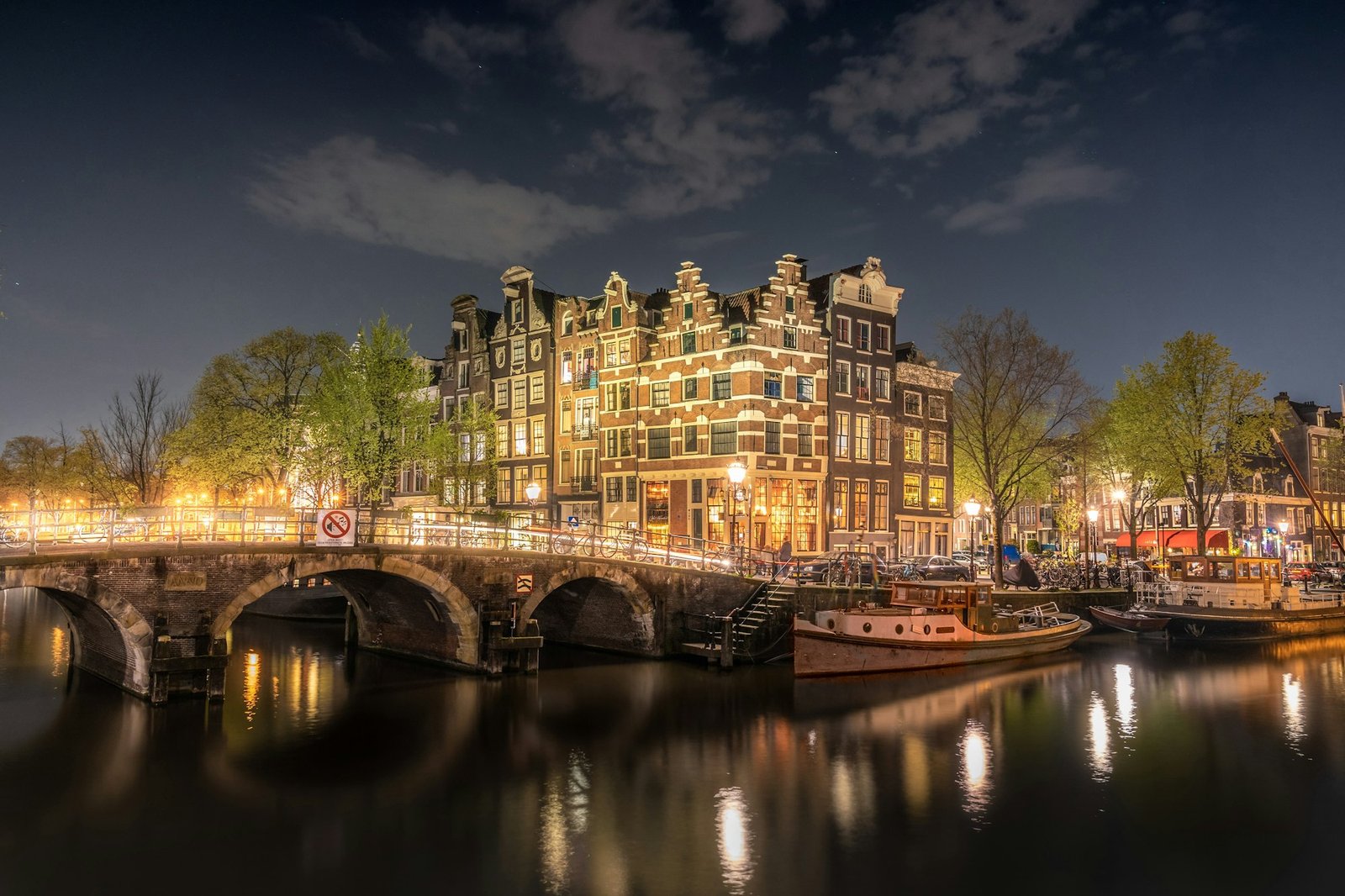
Everyone does a canal cruise. Almost nobody does it right, which mostly means: not on one of the large glass-roofed boats that seat eighty people and narrate the tour through speakers. A smaller, quieter boat — ideally one you’ve booked privately rather than boarded from a dock queue — takes you through the residential canals rather than only the postcard ones, and lets you actually hear the city rather than a recording about it.
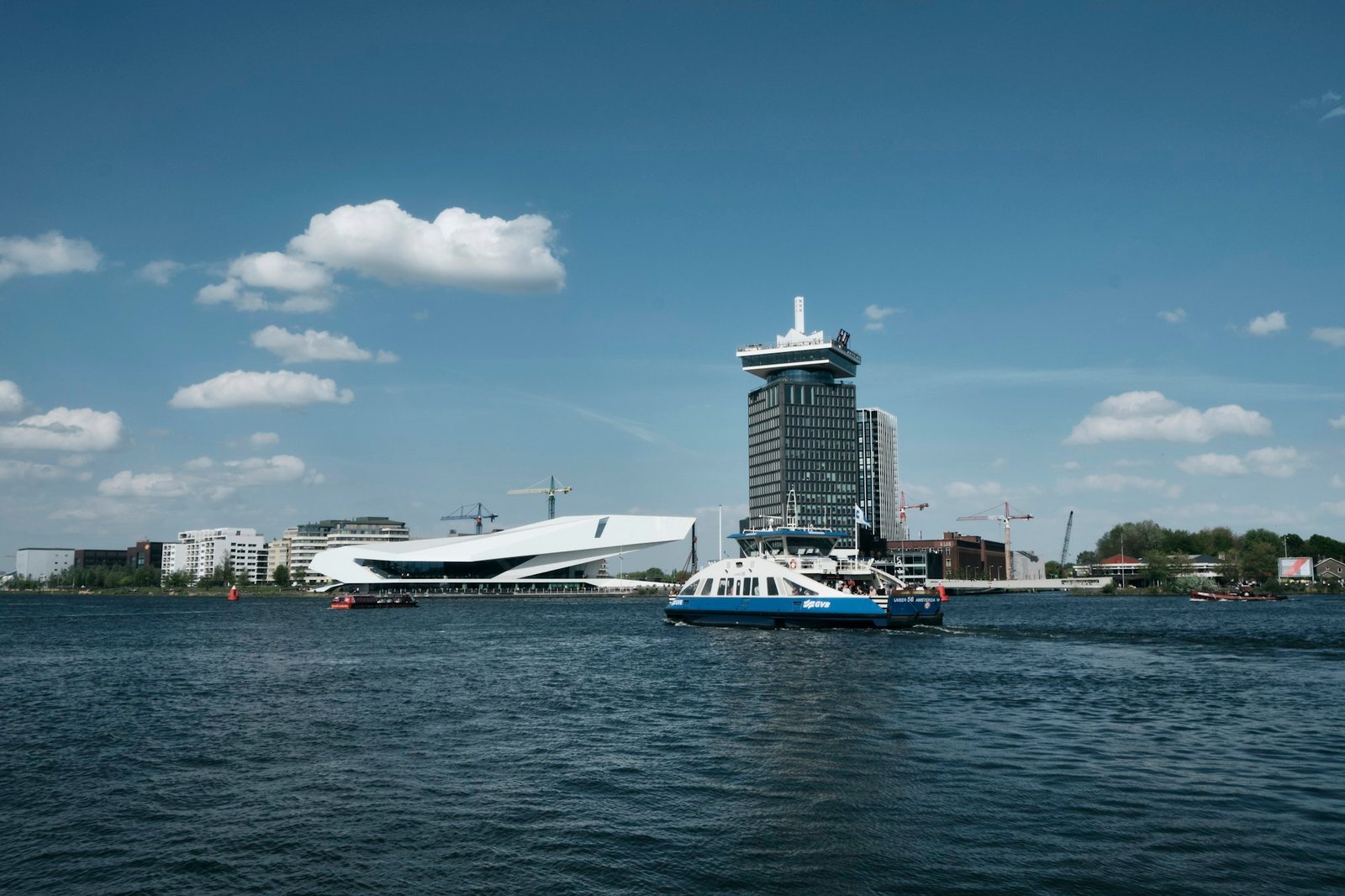
If the weather’s against you, the Amsterdam Noord ferry crossing is free, five minutes, and gives you the one skyline view of the city that isn’t from a canal at all — industrial, unfinished-looking in places, genuinely different from the rest of the trip.
When to go
April to May, or September. Amsterdam in July is not the Amsterdam we’ve just described — it’s the Amsterdam of queues, bikes you can’t hear coming, and every brown café full by six.
August is the one exception we’d make, for a specific reason. The Grachtenfestival puts ten days of classical and jazz into courtyards, churches, rooftops and floating pontoons along the canal belt, and a good part of it is free. Every performer is under thirty-five, which keeps the standard high and the programming braver than a safer festival would allow. Most visitors watch from the bridges, which is where the crowd is and where you hear the least — the small courtyard and church venues are the whole point. The Prinsengrachtconcert, the floating one that ends up on every postcard, is programmed separately and doesn’t reliably fall inside the festival week — check the two dates against each other rather than assuming one covers the other.
If the heat turns unreasonable — and a windless August afternoon inside the canal ring is worse than the forecast suggests — the city goes west to the coast. Bloemendaal aan Zee is twenty-six kilometres out: half an hour by car, closer to an hour on public transport, which means a train to Haarlem and then the 81 bus down to the sand. It’s the North Sea, not the Mediterranean. Take a jumper for the evening whatever the day has been doing. We wouldn’t plan a trip around it; we’d use it to rescue an afternoon.
What we’d tell you honestly
Build in time that isn’t scheduled. This is a city that rewards wrong turns more than most.
Book the Van Gogh slot the day it opens for your dates, and the boat a fortnight out — both sell through in summer, and both are worse experiences bought late.
Join