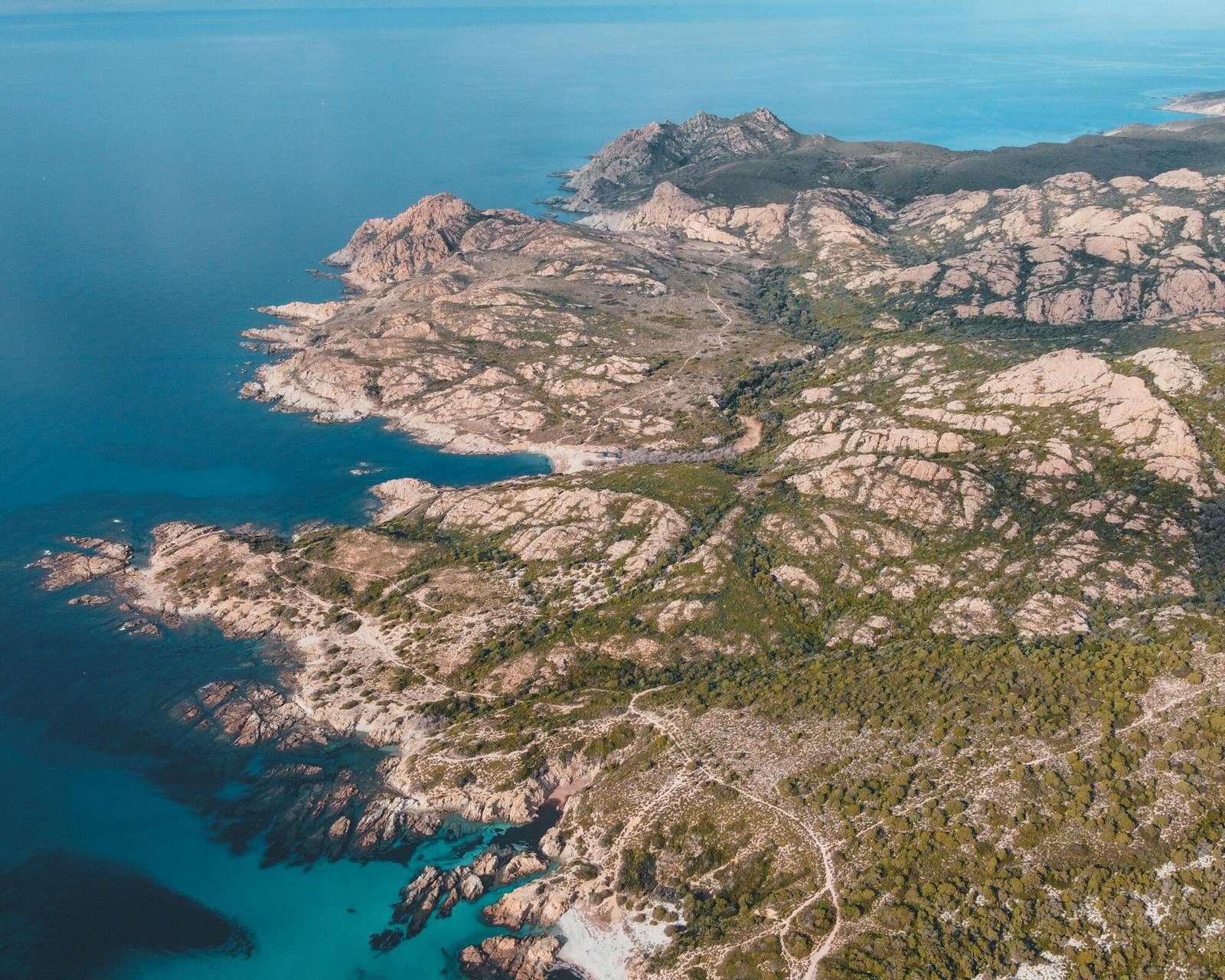
Corsica · Itinerary
Corsica, The South, In About a Week
The mistake almost everyone makes on a first trip to Corsica is trying to drive around it.
It looks small on a map. It isn’t, in any way that matters — the roads are mountain roads, the average speed on most of them is closer to 40km/h than 80, and the island’s own geography means the drive from one coast to the other takes most of a day even when the distance says otherwise. People arrive with a plan to see the whole thing in ten days and spend most of it in a car.
So: the south, and only the south. Roughly a week. This is the part of Corsica where the villa market is genuinely good, where the beaches justify their reputation, and where you can be somewhere serious for dinner without a two-hour transfer.
Where to base yourself, and why it matters more here than elsewhere
Pick one base and stay in it. The instinct to split a week between two or three places makes sense on paper and is almost always wrong here — you lose half a day each time to packing, driving and finding your feet again, and Corsican check-in times are not famously flexible.
The area between Porto-Vecchio and Bonifacio is where we’d put most people. It’s the densest concentration of good villas on the island, close enough to Figari airport that arrival isn’t an ordeal, and within reasonable reach of both the coast and the mountains behind it.
A word on villas, since it’s the reason a lot of people come: the difference between a good one and a very expensive one is almost entirely about position and water. A villa fifteen minutes inland with a pool is a fine holiday. A villa with actual sea access, or a proper terrace facing west over the water, is a different trip. If you’re spending seriously, spend it on that rather than on square metres.
The beaches, ranked honestly
Palombaggia is the famous one and deserves it — umbrella pines coming almost to the sand, water that shades from clear to a genuinely improbable turquoise over white granite sand. It’s also, in August, close to unusable by two in the afternoon. Go at eight in the morning or after five, or go in June.
Santa Giulia, the next bay south, is shallower and calmer — better with small children, slightly less spectacular, similarly busy.
Rondinara, between Porto-Vecchio and Bonifacio, is the one we’d send you to if you only had one morning. A near-perfect shell-shaped bay, sheltered on both sides, with a single beach bar and a track in that’s just rough enough to put off some of the crowd.
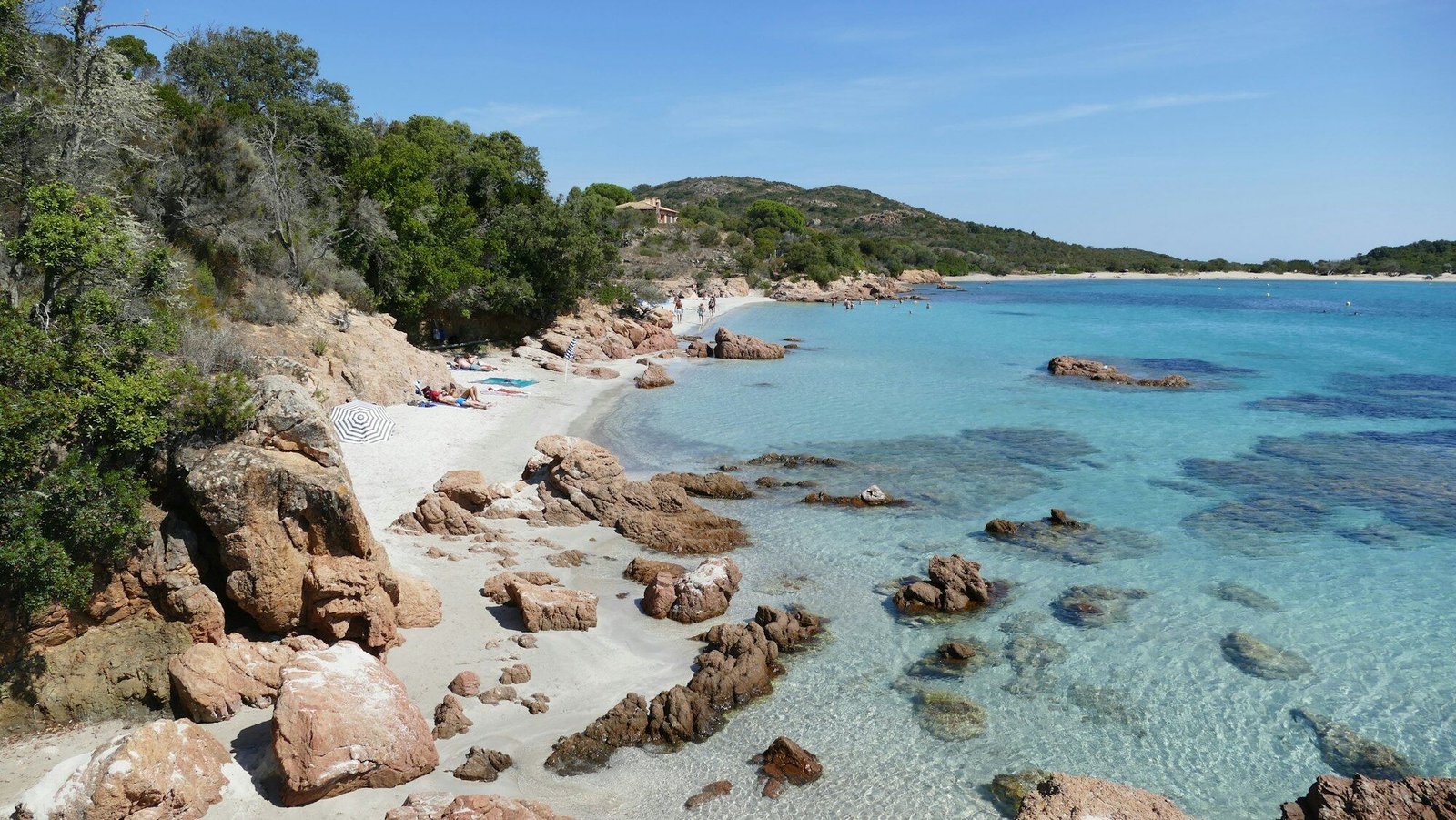
If the beaches matter more to you than anything else, the honest answer is to take a boat for a day. The best water in the south — the Lavezzi islands, a scatter of granite between Bonifacio and Sardinia — is only reachable by sea, and swimming there on a weekday in June is the single memory most people bring back.
Bonifacio: go, but not at midday
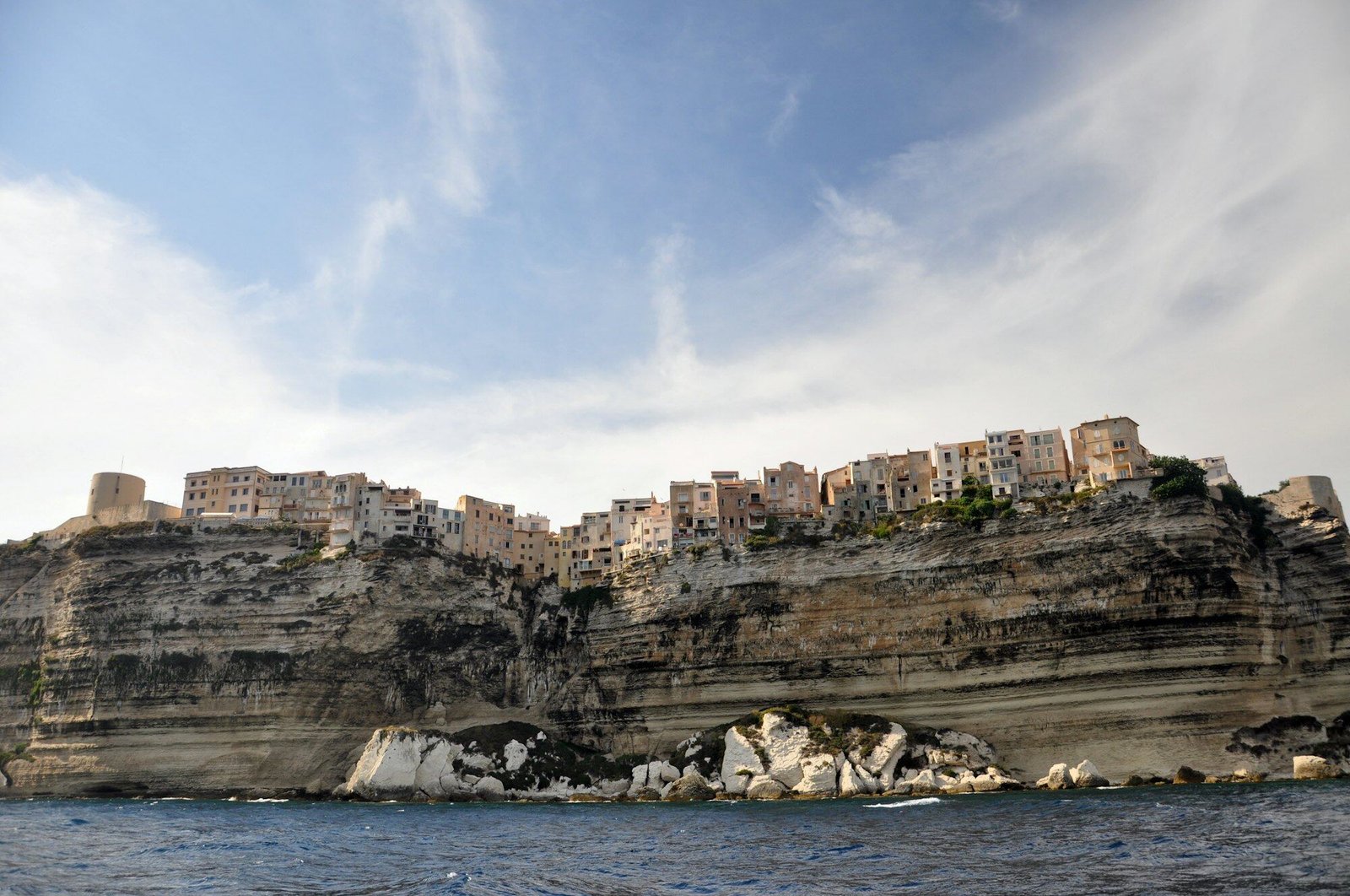
Bonifacio is built on a limestone promontory that drops two hundred vertical feet straight into the sea, with the old town sitting on top of the cliff and the marina in the fjord-like inlet below. It’s spectacular in a way that photographs badly, because no single frame gets both the height and the town.
The haute ville is worth a slow hour, ideally early or at the end of the day. The Escalier du Roi d’Aragon — 187 steps cut steeply into the cliff face — is the thing everyone photographs and, we’d argue, not the thing worth doing: it’s steep, hot, crowded and the view from the top of the cliff is better than the view from partway down it. Skip it and walk the ramparts instead.
The best view of Bonifacio is not from Bonifacio. It’s from a boat, twenty minutes offshore, looking back at the town sitting on an overhang the sea has been undercutting for several thousand years.
One day inland, minimum
This is the part most beach-focused itineraries skip, and it’s the part that makes Corsica Corsica rather than a nice Mediterranean island.
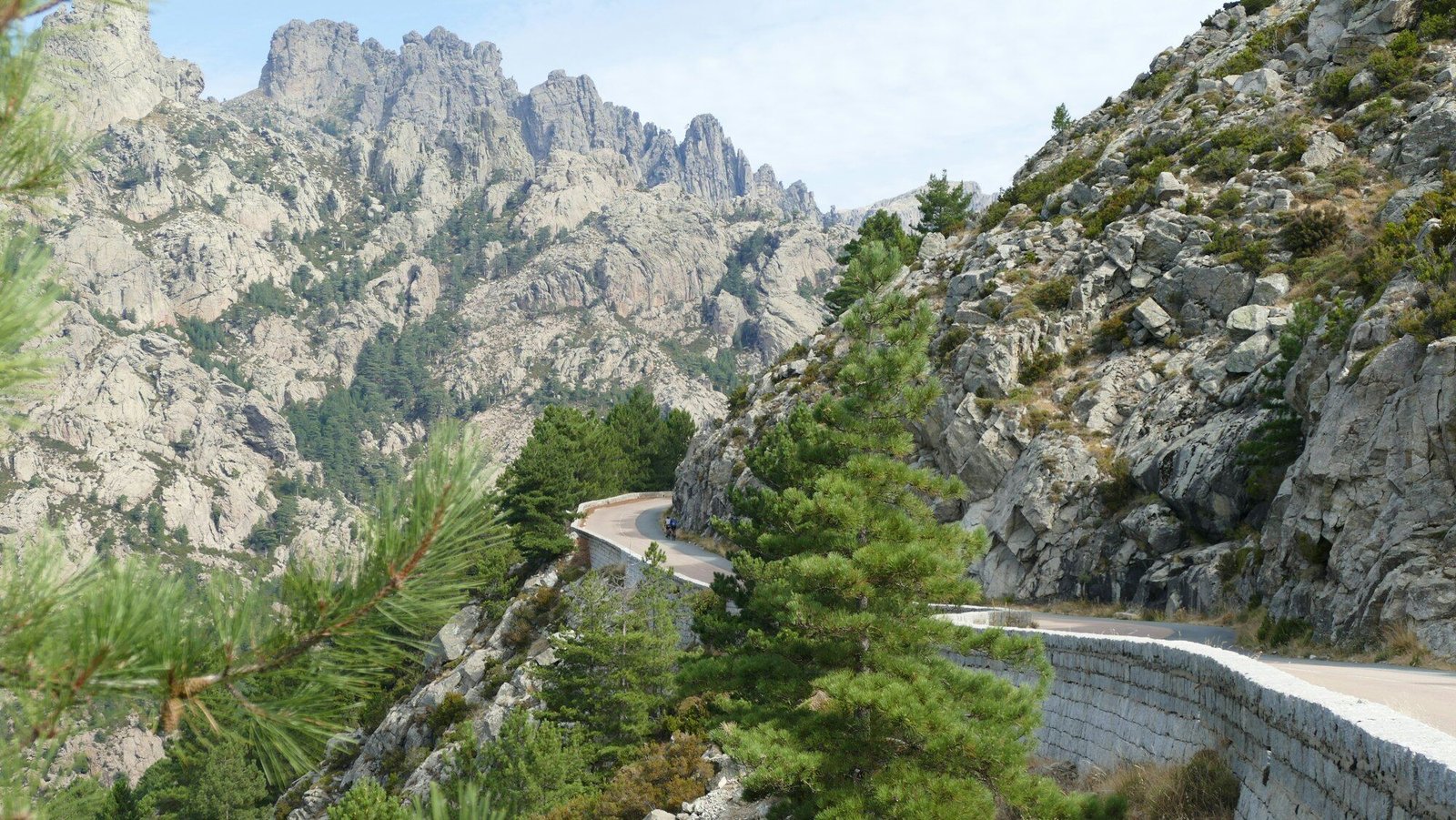
Drive up to the Aiguilles de Bavella — a set of granite needles at around 1,200 metres, about ninety minutes from Porto-Vecchio on a road that earns every one of those ninety minutes. The temperature drops noticeably. The vegetation changes from maquis scrub to laricio pine. There are usually free-roaming pigs on the road, which is not a joke and is a genuine driving hazard.
On the way back down, stop in one of the villages of the Alta Rocca — Zonza, Quenza, Sainte-Lucie-de-Tallano — and eat lunch somewhere with four tables and a handwritten menu. Charcuterie here is the real thing: coppa, lonzu, figatellu in season, from pigs that spend their lives eating chestnuts and acorns in the forest you just drove through. It tastes like it.
Eating, and the thing nobody tells you
Corsican restaurants close. Not for the afternoon — for the season. A large share of the good places on this coast open in mid-April and shut in mid-October, and a decent number of the best village restaurants in the interior keep even shorter hours than that. If you’re coming in late October or early April, check individually rather than assuming.
In season, book. The good small places in Porto-Vecchio fill a few days out in July and August, and turning up hopefully at nine on a Saturday means eating somewhere that was always going to have a table.
Ask for the local wine rather than the list. Figari and Porto-Vecchio AOC whites and rosés are made a few kilometres from where you’ll be sitting, they’re good, and almost nobody exports them, which means this is more or less the only place you’ll drink them.
When to come
June and September. Not a hedge — a genuine recommendation. The water is warm enough from mid-June, the restaurants are all open, the beaches are usable at midday, and villa rates are materially lower than the July–August peak.
July and August are hot, full, and the roads to the beaches back up in a way that changes the character of the day. If those are the only weeks you can travel, come anyway — but plan around early mornings and boats rather than around driving to beaches at eleven.
May is beautiful and the sea is still cold. October is quiet, the light is extraordinary, and half of what you’d want to eat at is shut.
A note on villas: photographs never show the road in. Ask the owner directly how long the last kilometre takes and whether a normal hire car does it — the answer tells you more about the week than the terrace does.
Join