Corsica · Sensory
You Smell Corsica Before You See It
The line everyone quotes is Napoleon’s — that he could recognise Corsica with his eyes closed, from the smell of the maquis carried out to sea. It’s the sort of thing that sounds invented until you fly in with the windows of the hire car down and realise it’s just accurate.
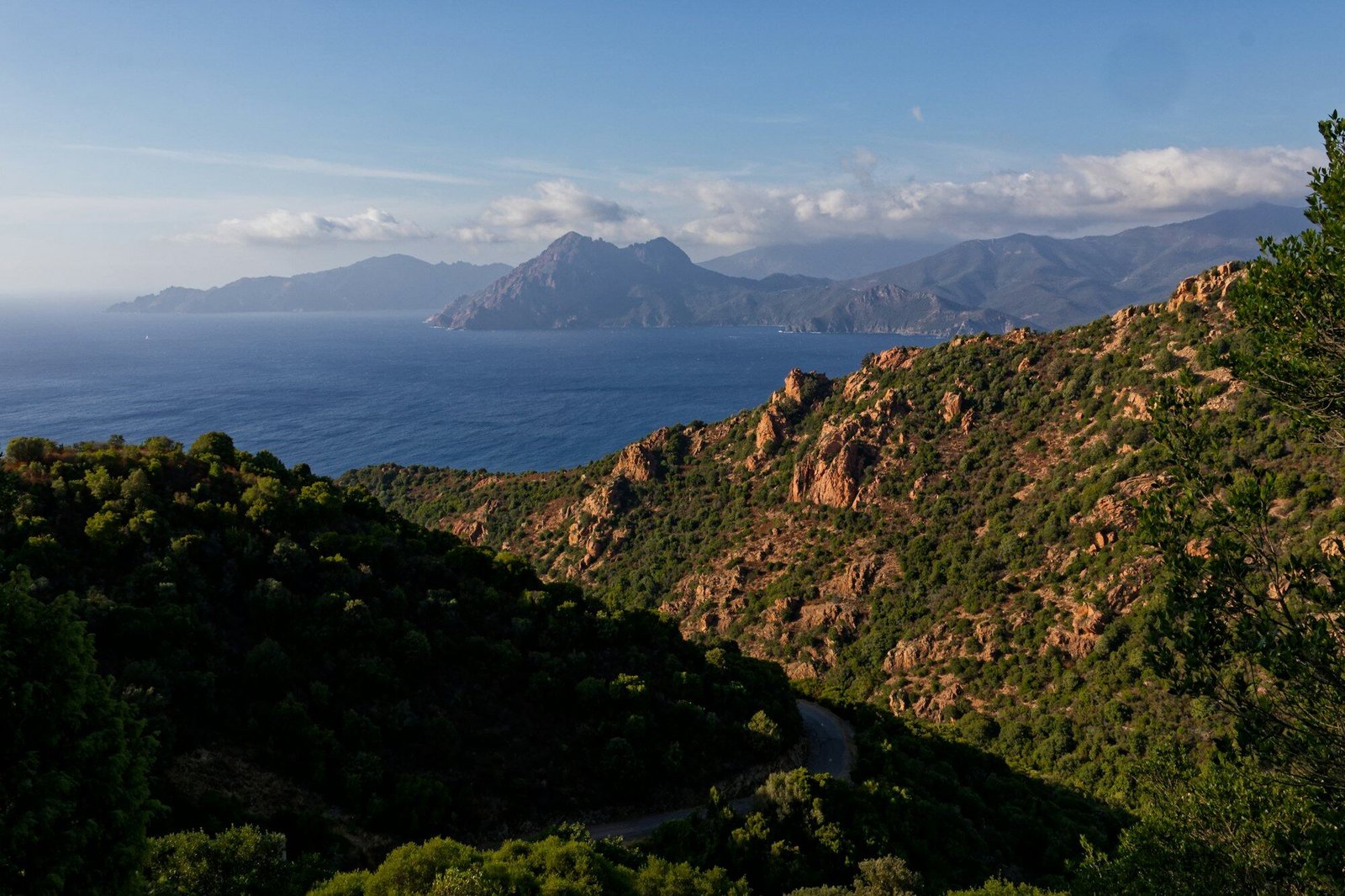
The maquis is the scrub that covers most of the island below about a thousand metres — a dense, low, aggressively fragrant tangle of myrtle, rockrose, juniper, lentisk, arbutus, wild rosemary, thyme and immortelle. In late spring it is genuinely overwhelming. Warm rock, resin, something herbal and slightly bitter underneath the sweetness. It gets into everything: your clothes, the car, the towels drying outside.
It’s also the reason the island’s honey tastes the way it does, and why the local charcuterie has a flavour that doesn’t quite transfer anywhere else. The pigs eat this. Then you eat the pigs.
The specific problem of Corsican water
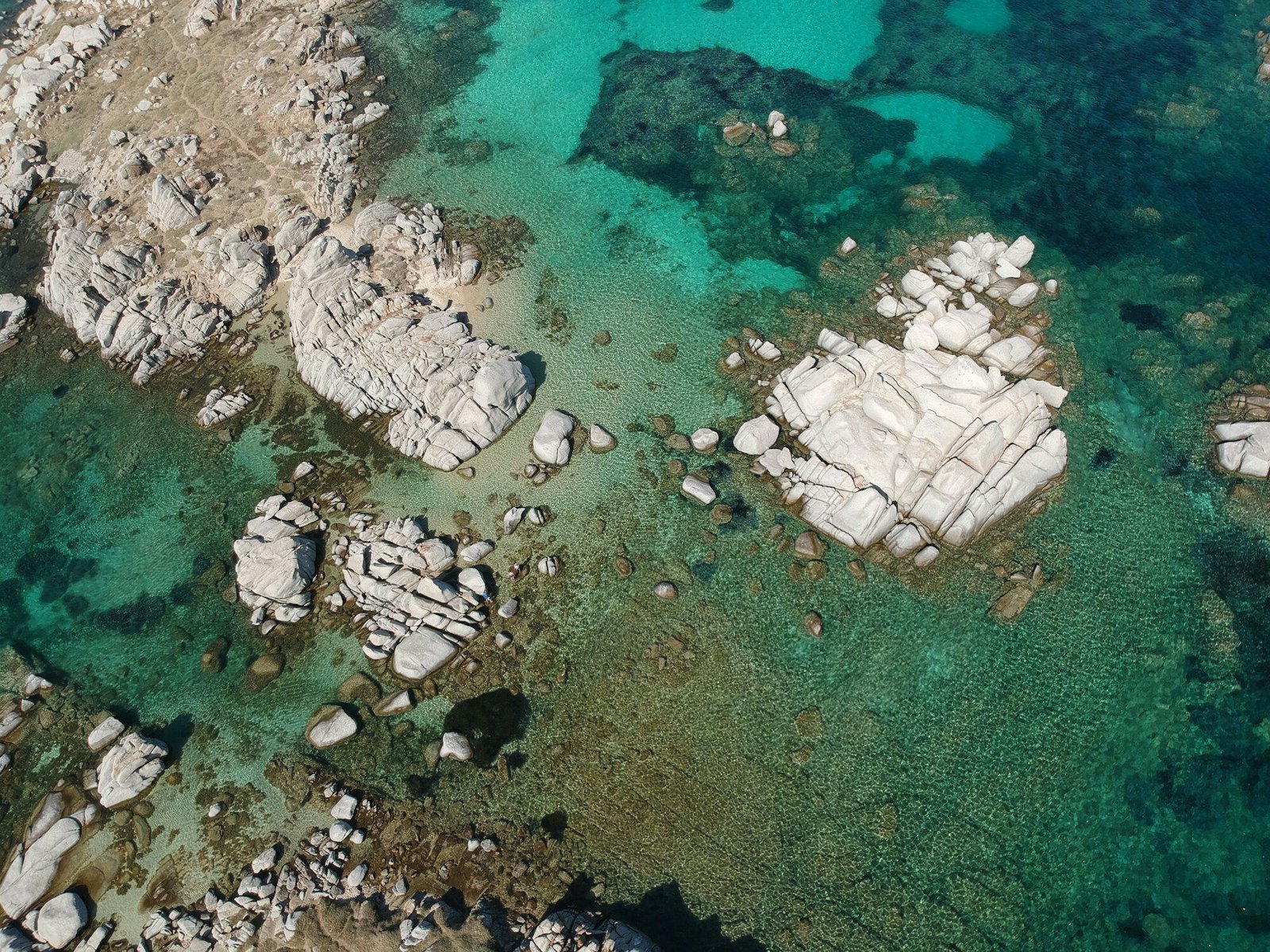
Photographs of the sea here get accused of being edited, and they usually aren’t. What’s happening is a combination of two things: the sand in the south is largely eroded granite, which is pale and reflective, and the water is unusually clear because there’s very little river silt and almost no heavy industry on the island.
The result is that in three metres of water over pale granite sand, on a bright day, the colour genuinely does the thing — a saturated turquoise that shades to a deep ink blue where the sand drops away. The boundary between the two is visible as a hard line from a boat. Swimming across it is slightly disorienting the first time.
The best hour is early. Not for the light, though the light helps — early because the water hasn’t been stirred up yet by boats and swimmers, and because the wind usually comes up around eleven.
Light, and the reason painters kept coming here
Corsican light in June is hard and white at midday and does almost nothing flattering to anything. Everyone’s photographs from between eleven and four look the same and look bad.
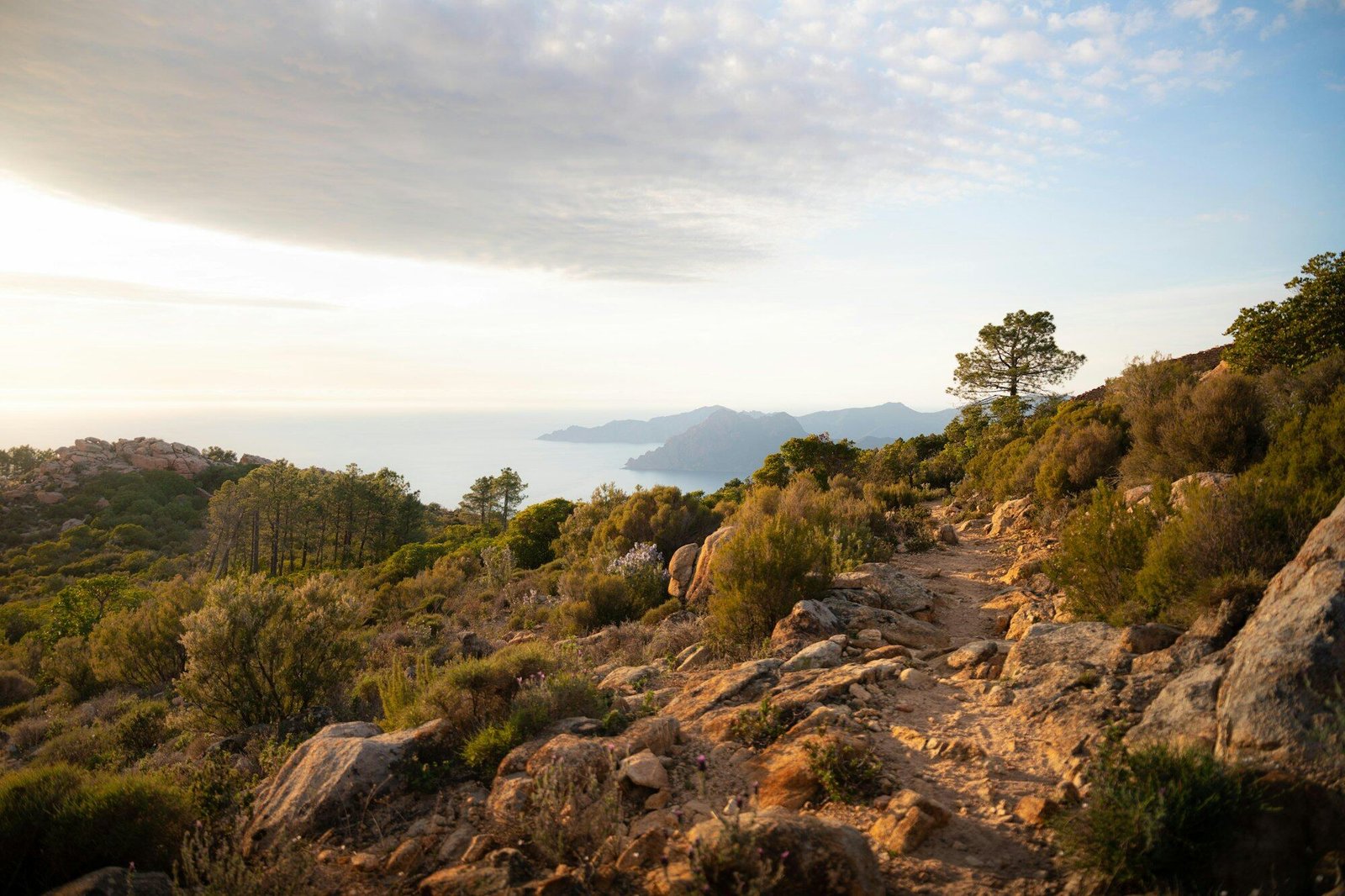
What’s worth waiting for is the last hour, particularly on the west coast. The Calanques de Piana — a formation of red porphyry rock above the Gulf of Porto — go through a sequence at sunset that starts orange, moves through something closer to blood red, and ends up a dull purple as the light goes. It lasts maybe twenty minutes. The road through them is narrow and there is nowhere good to stop, which means half the people watching are standing next to their cars in a passing place, which somewhat undercuts the majesty but doesn’t ruin it.
The east coast gets the reverse — soft, hazy mornings over flat water, the mountains behind still in shadow while the sea has already gone bright.
Sound: cicadas, and then nothing
The summer soundscape is dominated almost entirely by cicadas, at a volume that surprises people who’ve only encountered them in Provence. They start when the day heats up, they stop abruptly at dusk, and the silence afterwards is quite startling — the maquis is not a habitat with much else making noise in it.
Higher up, in the laricio pine forests around Bavella or the Ospedale, it’s genuinely quiet in a way the coast never is. Wind in pines, occasionally a bell from a free-ranging cow or pig, nothing else. Worth driving up for an hour at some point in the week just for the change in the ambient noise.
Heat, and how it behaves here
August heat in Corsica is dry rather than humid, which makes it more bearable than the same temperature in Italy, and also means you dehydrate faster than you notice. The interior is consistently cooler than the coast — a difference of eight or ten degrees between Porto-Vecchio and Zonza on the same afternoon is normal, and it’s the reason the villages are where they are.
The wind matters more than the temperature. The libeccio comes from the southwest and can shut down the boats for a day; the mistral comes down from the northwest, cools everything, and turns the sea from glass to whitecaps in about an hour. Neither is a disaster. Both will rearrange your day if you’d planned it around the water.
The thing that stays with people
Almost everyone we send here comes back describing the same two things, in the same order: the colour of the water, and the smell.
The colour they were expecting — it’s on every photograph of the island ever taken. The smell they weren’t, and it’s the one that turns up again unexpectedly, months later, from a jar of honey or a bunch of dried herbs. It’s the most portable thing about this island and the only part of it nobody warns you about in advance.
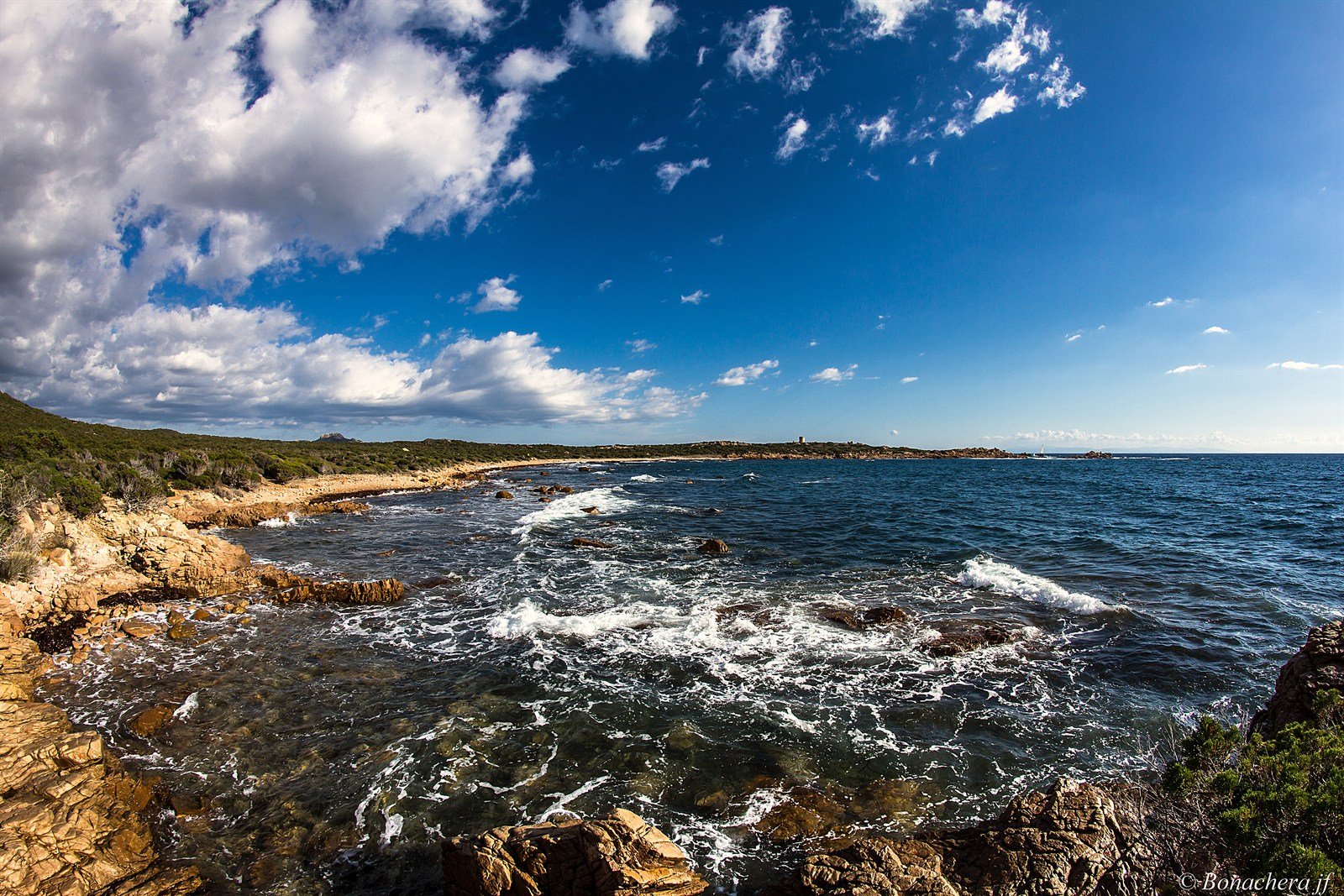
Coastal photograph by Bonachera jf, CC BY-SA 4.0, resized; this modified version is released under the same licence.
Join