Corsica · Culture & Food
The Corsica That Has Nothing To Do With the Beach
Something you notice within about a day of arriving, if you’re paying attention: the road signs have been shot.
Not all of them, and less than they used to be, but often enough that first-time visitors stop and ask about it. What’s happened is that the French place names have been spray-painted over — or occasionally shot at — leaving the Corsican ones. Portivechju rather than Porto-Vecchio. Aiacciu rather than Ajaccio. It’s a small thing and it tells you something fairly large about where you are: an island that has been governed from elsewhere for most of its recorded history and has never entirely made peace with the arrangement.
You can have a perfectly good week here without engaging with any of that. But the interior — the villages, the food, the language, the singing — is the part that makes this island unlike the rest of the Mediterranean, and it’s about forty minutes inland from most of the coast.
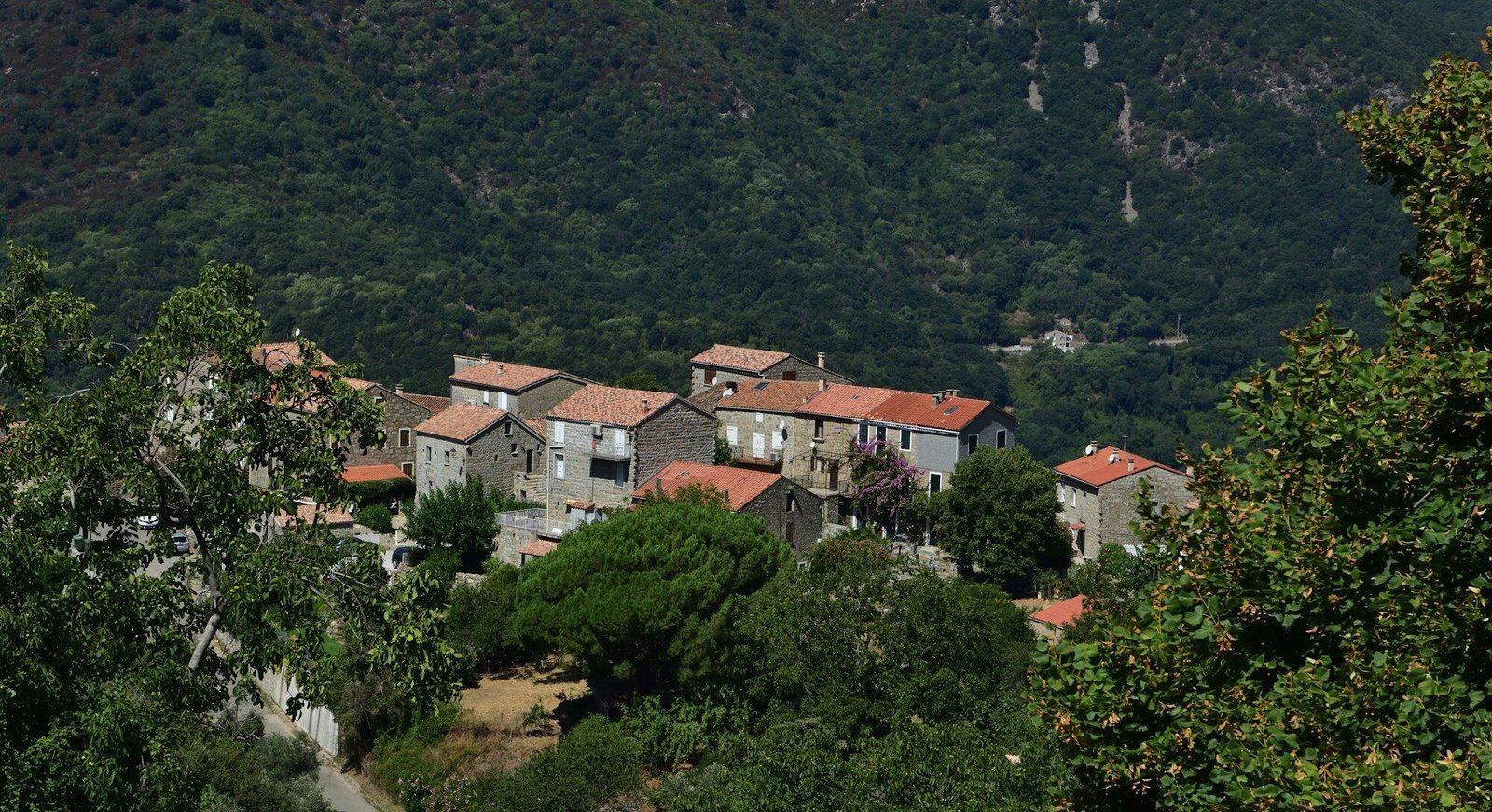
The villages are where people actually lived
Corsica’s historical settlement pattern is the opposite of what you’d expect from a Mediterranean island: for centuries, almost nobody lived on the coast. The shore meant malaria, and it meant raiders — Barbary corsairs took people off Corsican beaches into slavery well into the eighteenth century. So the villages went up in the hills, defensible, three hundred to eight hundred metres above the sea, close enough to farm the terraces and far enough to see trouble coming.
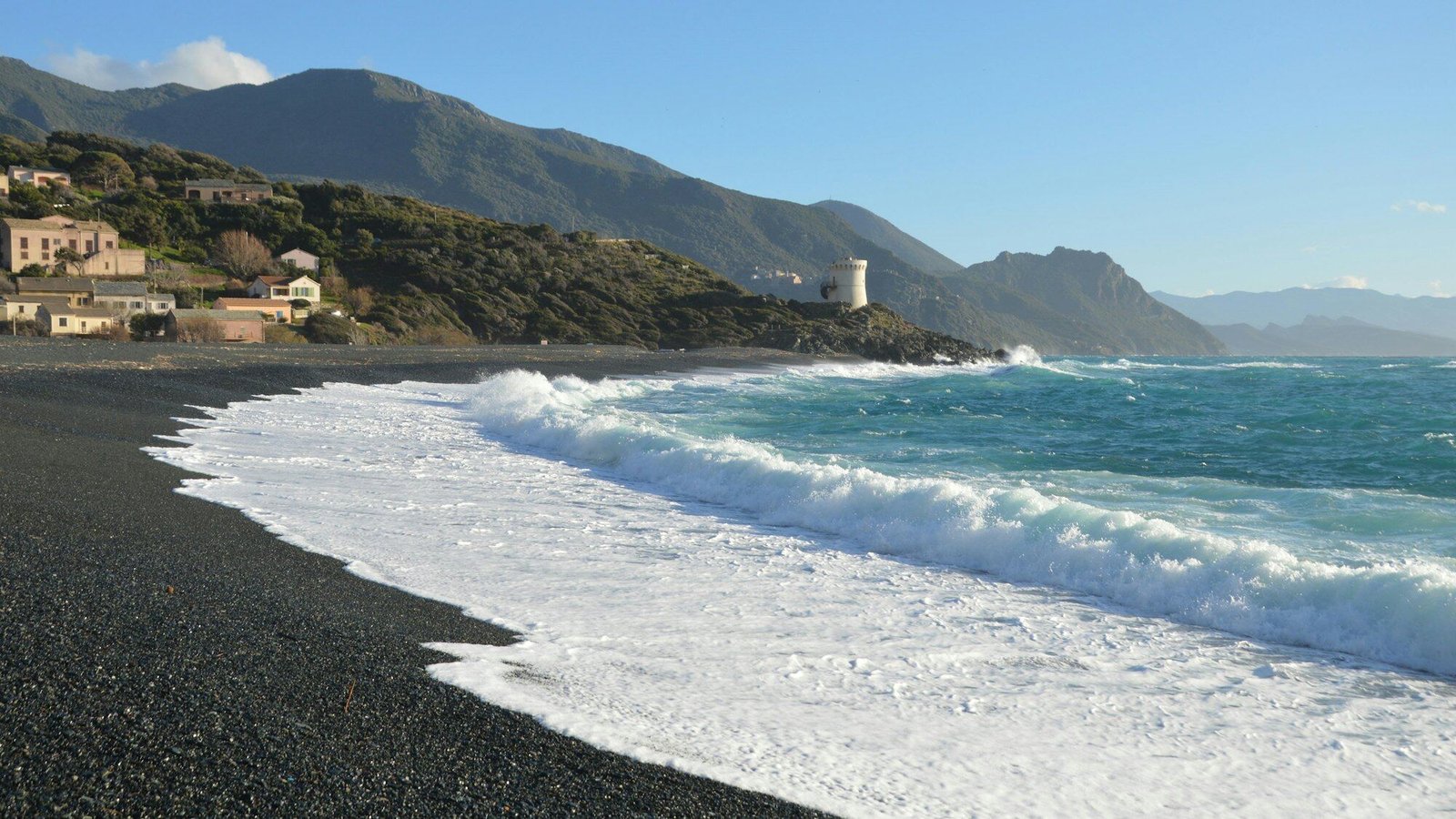
The Genoese towers you see on almost every headland — there were once around eighty-five of them, and a good number still stand — were the early-warning system. They were built to be within sight of each other, so a signal fire on one could travel around the island in a couple of hours.
Which means: the pretty coastal towns are mostly recent, and the villages that feel oldest are the ones you have to drive up to.
Sartène, in the south, is the one Prosper Mérimée called the most Corsican of Corsican towns in the 1830s, and it hasn’t tried very hard to disprove it since. Tall grey granite houses, narrow stepped streets, a general sense of a place that is not especially interested in whether you find it charming. Go. Don’t expect to be catered to.
Food that comes from the forest, not the sea
The single most useful thing to understand about Corsican cooking is that it’s a mountain cuisine on an island. Not seafood. The traditional food here is pork, chestnut, cheese and game — the food of people living at altitude with limited arable land.
Chestnut flour — farina castagnina — was the staple carbohydrate in the interior for centuries, in a region where wheat wouldn’t grow well. It’s still used: in pulenta (a dense chestnut polenta, usually served with charcuterie or a stew, and nothing like Italian polenta), in cakes, in beer. If you see something on a menu with chestnut in it, order it. It’s not a novelty item here.
Brocciu is the cheese that matters — a fresh whey cheese, sheep or goat, somewhere between ricotta and something richer. It’s genuinely seasonal, roughly November to June, because it depends on the animals lactating. Anyone selling you fresh brocciu in August is selling you something else.
The charcuterie — coppa, lonzu, prisuttu, and figatellu (a liver sausage, eaten grilled, winter only) — comes from the porcu nustrale, a semi-feral local breed that forages chestnuts and acorns in the forest. The good stuff is expensive, comes from small producers, and is worth the difference in a way that’s immediately obvious on the plate. The cheap stuff in the supermarket is often not from Corsica at all, whatever the packaging suggests.
Paghjella, and why you should try to hear it live
Corsican polyphonic singing is three male voices — a segonda carrying the melody, u bassu underneath, a terza above and ornamenting — singing without instruments, usually standing close together, often with a hand cupped over one ear. It’s on UNESCO’s intangible heritage list. It sounds nothing like the sort of thing that ends up on a UNESCO list.
The reason to hear it live rather than on a recording is that the technique produces harmonics that a recording flattens — sung in a stone church, the three voices generate what sounds like a fourth. Groups perform in village churches through the summer, usually announced on a paper poster taped to a door rather than anywhere findable online. Ask locally. It’s worth rearranging an evening for.
A note on how to be here
Corsicans have a reputation among French mainlanders for being unwelcoming, and it’s mostly unearned and slightly self-fulfilling. What’s true is that the social register is different from the rest of France: less performed politeness, less service-industry warmth, more directness. A shopkeeper who doesn’t smile at you is not being rude. A conversation that starts flatly will usually warm up considerably if you’re not in a hurry.
The one thing that reliably lands badly is treating the island as a French region that happens to have nice beaches. It isn’t, and everyone here knows it isn’t, and a small amount of acknowledgement of that goes a long way.
If you only do one inland thing
Drive to Corte. It sits almost exactly in the middle of the island, it was the capital of the short-lived independent Corsican Republic under Pasquale Paoli in the 1750s — a genuinely radical constitutional experiment, and one Rousseau took seriously — and it’s still the seat of the island’s university, which means it has a student population and an argumentative intellectual life that no other town here has.
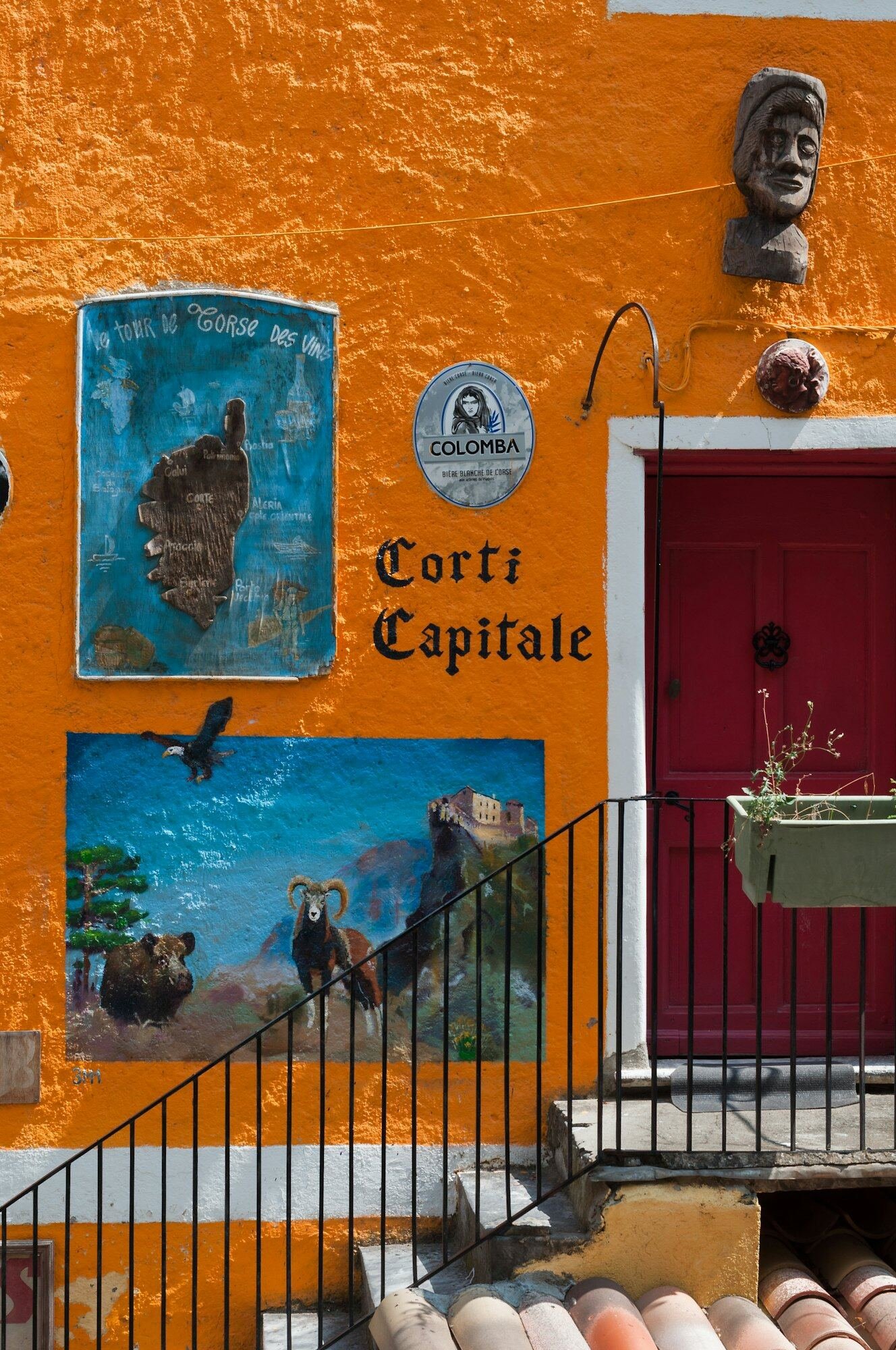
Walk up to the citadel. Then drive twenty minutes into the Restonica gorge behind the town, park, and walk far enough up the river that the noise of the car park is gone. That’s the interior. That’s the part the beaches are the exception to.
Join